Thursday, November 26, 2009

Happy Thanksgiving


Happy Thanksgiving.

Bob

Monday, November 23, 2009

The Cost of Dying -- 60 Minutes Video and Transcript

"Families cannot imagine there could be anything worse than their loved one dying. But in fact, there are things worse....Most generally, it's having someone you love die badly, suffering, dying connected to machines." -- Dr. Ira Byock, Dartmouth-Hitchcock Medical Center....
Last year, Medicare paid $50 billion just for doctor and hospital bills during the last two months of patients' lives. That's more than the budget of the Department of Homeland Security or the Department of Education. And it has been estimated that 20 to 30 percent of these medical expenditures may have had no meaningful impact.

The vast majority of people say they want to die at home, but 75 percent die in a hospital or nursing home. Many Americans spend their last days in an ICU, subjected to uncomfortable machines or surgeries to prolong their lives.


Subscribe to The Alzheimer's Reading Room--via Email

To read the transcript go here.

Popular articles on the Alzheimer's Reading Room

Bob DeMarco is the editor of the Alzheimer's Reading Room and an Alzheimer's caregiver. The Alzheimer's Reading Room is the number one website on the Internet for news, advice, and insight into Alzheimer's disease. Bob has written more than 950 articles with more than 8,000 links on the Internet. Bob resides in Delray Beach, FL.

Original content Bob DeMarco, Alzheimer's Reading Room

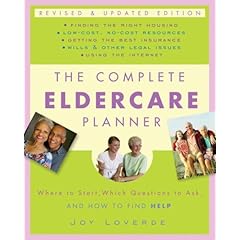
The Complete Eldercare Planner, Revised and Updated Edition: Where to Start, Which Questions to Ask, and How to Find Help

Wednesday, November 18, 2009

How To Beat Alzheimer's Incontinence

We are on a three day roll. No pee pee. No pee pee pajamas. No pee pee underwear. No pee pee pants......
Bob DeMarco
Alzheimer's Reading Room
Editor


My mother suffered from urinary incontinence long before I moved to Delray Beach to take care of her.

My sister Joanne was the first to notice the problem -- 8 or 9 years ago.
Subscribe to The Alzheimer's Reading Room--via Email

________________________________

Urinary Incontinence (UI) is a stigmatized, underreported, under-diagnosed, under-treated condition that is erroneously thought to be a normal part of aging. One-third of men and women ages 30-70 believe that incontinence is a part of aging (National Institute of Health, NIH).

You could put everything I knew about urinary incontinence in a thimble before I started to focus on this problem. Reading and learning about the problem helped me come to the conclusion that we could do something about it. A little education is always helpful.
________________________________

I want to make something clear. I did not arrive at this current solution to urinary incontinence over night. It took years.

Once we finally developed the current solution, it still took many months before it started to work effectively. Here is some good news. The solution is becoming more and more effective over time.

My solution is not perfect. It does not work every single day. It does not work every single night. I can say this with some confidence -- we no longer experience the flood. Now its more like the little tiny accident.

When we have a problem with incontinence during the day it usually happens because I am tardy or less than perfect in following the program.

If you decide to try this, it is going to be a lot of work. You will need to tailor my solution to fit you own needs or you own Alzheimer's sufferer.

If you are not ready to give this program everything you have to give -- you will likely end up frustrated, or quit.

If you make this work you will end up with a wonderful feeling of accomplishment, and frankly, keep more of your hair.
________________________________

If you really want to solve the problem of urinary incontinence, I suggest you try a little role reversal.

If you were the one with Alzheimer's and urinary incontinence, how would you want to be treated?

Would you want to be yelled at? Treated like a baby? Would you want to listen to someone constantly complain about how you are peeing all over yourself?

Would you want to feel all those bad vibes being directed at you?
________________________________

I tried many times to do something about incontinence over the years. All false starts. I gave up every time.

Finally, the problem was so bad that we were using 14 sets of pajamas and 24 panties. My mother was blowing through 3 pajama bottoms a night. Day time, same story with her cloths.

All I can say is, that is a lot of wash.
________________________________

My mother was suffering from incontinence from day one.

I turned to everyone I knew. I listened to their ideas and advice. I turned to women of all ages.

Most of the advice centered around two solutions -- pads and adult diapers.

I have to laugh at myself now as I remember my first trip to the store. I figured I would go in and grab what I needed and get on with the task at hand. Keep in mind I am a man.

Well the aisle that contained these products in Walmart was gigantic. It just went on and on. I think I spent more than 30 minutes trying to figure out which might work for the problem at hand.

In a way, it was mesmerizing. Oddly, since I am a curious person it was interesting to me. Later I thought to myself, wow, this is one big problem.
________________________________

I decided to try the adult diapers. At the mention of this, my mother pitched a fit.

I would get here to put the diaper on grudgingly. As soon as I wasn't looking she would take the diaper off.

If you are an Alzheimer's caregiver you can already imagine the things she was saying. Some of them not very nice.

Let me tell you what I was accomplishing -- I was making my mother miserable and mean. This in turn was making me miserable. The dreaded stomach ache.

Here is what I started to learn.

My mother did not believe there was a problem. It was embarrassing to wear a diaper. It was a sign of old age. If she didn't think there was a problem she would never accept the solution to the problem.

I thought to myself, well if there wasn't a problem I wouldn't wear a diaper either.

I gave up.
________________________________

Here we were again. 14 pair of pajamas, 24 undies.

Now I decided to try the pads, the inserts. I thought I had a new idea that would work.

I convinced my mother's elderly friends to talk to my mother and tell her how they used the inserts, pads, and diapers. How it was a normal part of getting old. I coached them to be very enthusiastic and tell her how great this solution worked. I asked them to smile and laugh all the way.

My mother listened -- in went the pad.

They went home and out came the pad. I know they say that the person suffering from Alzheimer's will eventually get use to the pads and every thing will be beautiful.

I tried and I tried and I tried. I gave up.
________________________________

I don't know why I didn't think of this sooner but I finally decided it was time for a trip into the Alzheimer's bunkhouse. I took my big newspaper pad with me and wrote -- problem incontinence -- right in the middle of the page with a big circle around it.

Then I started writing everything I could think of and remember about this problem all around that circle.

Then like magic like the light bulb went on in my head. I thought to myself, if I can do this I'll be like the Leonardo da Vinci of urinary incontinence (I'm Italian by the way).

To continue reading -- go here.


Popular articles on the Alzheimer's Reading Room
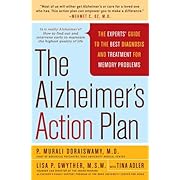


The Alzheimer's Action Plan: The Experts' Guide to the Best Diagnosis and Treatment for Memory Problems


Bob DeMarco is the editor of the Alzheimer's Reading Room and an Alzheimer's caregiver. The Alzheimer's Reading Room is the number one website on the Internet for news, advice, and insight into Alzheimer's disease. Bob has written more than 950 articles with more than 8,000 links on the Internet. Bob resides in Delray Beach, FL.

Original content Bob DeMarco, Alzheimer's Reading Room

Saturday, November 14, 2009

Simple Tests to Detect Alzheimer's and Dementia the Old Fashioned Way


In my little world here in Delray Beach, Florida I have learned a harsh lesson -- it is very difficult to diagnose mild cognitive impairment, dementia, and probable Alzheimer's. Here are some simple tests for Alzheimer's and dementia that could be helpful......
Bob DeMarco
Alzheimer's Reading Room
Editor


I knew something was wrong with my mother. I knew it. When I would mention some of my concerns to family and friends they would usually conclude -- she is getting old. When it first started to really bother me my mother was 86 years old.

Her friends that saw her everyday would tell me she is doing great. Her doctor of six years didn't see a problem.
Subscribe to The Alzheimer's Reading Room--via Email

I did know her behavior was undergoing subtle changes. She talked about money incessantly, she complained about being bored incessantly. She started scrapping her feet on the ground. She said things that lead me to believe she was feeling insecure, maybe fear -- these were very different than what I heard her saying in the past.

After my mother was diagnosed with dementia her friends refused to believe both the diagnosis and me. When she would talk to family and friends that lived far away they would usually say --she sounds great.

She did sound great. She could still drive, go to the store, and play bingo. What they didn't see was how her behavior would often turn erratic. I invited all of them to come live in the front row for a few days -- they passed.

____________________________

The time came when I decided to come and spend some extended time with my mother and try to find out what was happening. At the time, you could put everything I knew about Alzheimer's and dementia in a thimble.

It took a few months before I finally started to understand the problem. It took four doctors to get to the bottom of the problem. None of the people that were seeing my mother on a daily basis saw a problem.

People in an early stage of dementia are very good at disguising the problem. They can laugh and change the conversation when you ask them questions about memory, or the ability to go here and go there. For me, it was the changes in behavior, the meanness, and the inability to walk more than a block that tipped me off.

____________________________

If a person suffering from dementia gets lost or starts having problems driving, you will never hear about it. The last thing an elderly person wants to do is lose their independence. One of the biggest symbols of independence is the drivers license. Trying to get that drivers license is like trying to get a steak out of the mouth of a bull dog.

____________________________

After I had been hear a couple of years, I learned some interesting things about my mothers behavior.

She drove her car over a concrete abutment, through a hedge and hit a tree. She then drove the car around some trees, over a sidewalk, over the lawn, and put the care in her condominium parking space. She didn't tell me, my brother, or my sister.

When I first learned about this her friends were laughing telling the story. They were impressed by the fact that she actually got the car back into her space. They did not see it as an indication that maybe she shouldn't be driving -- or worse.

Her friends, still friends, also forgot to mention that they stopped inviting my mother to their lunch time outings to restaurants because she constantly complained about money. When I asked them years later, when I first learned about this, if she had always done this -- they said no. In other words, her behavior had clearly changed but it had no impact on their view of her health.

____________________________

If you live far away from your parent and they are over 80, there is a good chance you could end up in the same situation I found myself in six years ago.

Here are few things you can try to spot mild cognitive impairment, Alzheimer's or dementia at an early stage.

To continue reading -- go here.

Sunday, November 08, 2009

Simple Techniques for Communicating with People with Alzheimer's and Dementia

If you live with or care for someone with Alzheimer's or dementia, you should consider reading this book. The Validation Breakthrough will help you understand why Alzheimer's sufferers say what they say and do what they do. This book helps you understand communication that is often difficult to accept and hard to interpret.

You might get the impression from the title that this book is only for professionals -- this is not the case. The validation theory works and it is simple to apply.

The case studies are invaluable and provide you with specific situations that you are sure to encounter.

I am convinced everyone involved with elderly parents suffering from dementia or Alzheimer's will benefit from reading this book.

You will certainly reduce stress by learning these techniques.


The Validation Breakthrough: Simple Techniques for Communicating with People with Alzheimer's Type Dementia

Subscribe to The Alzheimer's Reading Room--via Email


Reviews

By Martine Davis

If you live with or care for someone with Alzheimer's or other age related dementia, you must read this book ! What an eye-opener! For the first time I finally understood why Alzheimer's patient say what they say and do what they do. It all makes so much sense now. This small book reads quickly and is full of examples of real people who have been helped with the author's techniques. It shows you how to handle the blaming, accusing, name-calling and the repetitive motions ... It also explains why the way most of us react to Alzheimer's patients actions actually worsens the situation and can cause them to progress to a more advanced stage of Alzheimer's disease ! This book could extend the relationship between the patient and caregivers and should be MANDATORY reading for all staff working in nursing homes and long-term care facilities !

By J. Summers, CNA (Alaska)

An excellent book for both the professional caregiver and families trying to deal with this sometimes unfathomable disease. Gives practical ideas and techniques for helping people with dementia deal with issues from paranoia and blaming to sadness and helplessness. I have just begun to explore these techniques and am finding they work so well that they should be mandatory training for nurses, PCAs and CNAs. Instead of treating our seniors like they are children we at last have a way to talk to them on an adult level, tap into where they are at, deal with the problem at hand and we all come out better for the experience.


Reviewer: A reader

More and more relevant as we care for aging parents. With a title like this one might think: "Boring" Absolutely not so! Right from the start, the stories of the people are so real and so touching that one of my friends said she was moved to tears. She was so sad not to have known about this way of relating to her father. "It works," she told me. "Validation Breakthrough" shows a new way of relating to people with dementia of Alzheimer's type. This approach is effective in helping the person to clear up unresolved issues in their lives. You do not have to be a professionally trained therapist to use validation. Validation will make the relationship more rewarding for both people. It is not hard to learn and makes wonderful sense. Some readers may want to ask new questions of care facilities (like nursing homes) as the validation approach will keep loved ones from slipping into a vegetative state. It will also make the care much kinder, and more rewarding for the care givers


Popular articles on the Alzheimer's Reading Room


Original content Bob DeMarco, Alzheimer's Reading Room