Thursday, August 20, 2009

Aricept and Namenda Together for Alzheimer's Patients

My name is Bob DeMarco, I am an Alzheimer's caregiver. My mother Dorothy, now 93 years old, suffers from Alzheimer's disease.

A year ago, my mother's Alzheimer's disease started to worsen. As a result, I was both concerned and worried.

At the same time, I read a new research study about the combination of Aricept and Namenda as a treatment for Alzheimer's disease.
"The results of this study should change the way we treat patients with Alzheimer's disease. Cholinesterase inhibitors are approved for use in mild to moderate dementia, while memantine has been approved for advanced dementia. But it looks like there is an advantage in prescribing both drugs as initial treatment."--John Growdon, MD

The results of the research study indicated that the combination of Aricept and Namenda helped slow the rate of decline in Alzheimer's patients.

To continue reading go here.

Original content the Alzheimer's Reading Room.


The Complete Eldercare Planner, Revised and Updated Edition: Where to Start, Which Questions to Ask, and How to Find Help

Friday, August 14, 2009

Mediterranean Diet and Exercise Reduces the Risk of Alzheimer's by 60 Percent

My name is Bob DeMarco, I am an Alzheimer's caregiver. My mother Dorothy, now 93 years old, suffers from Alzheimer's disease.

I wrote previously about how exercise in a gym has an immediate positive effect on my mother's behavior and attitude. There are many articles here on the Alzheimer's Reading Room about the importance of a healthy diet, and how it could lower the risk of Alzheimer's in older age. I also wrote a few times about how a Mediterranean-type diet can help slow cognitive decline.

Now for the first time, a new research study has studied the combination of exercise and the Mediterranean diet -- the results are encouraging.

The study found that
  • those subjects who were very physically active had a 33 percent risk reduction of Alzheimer’s,
  • those who adhered more strongly to a Mediterranean-type diet had a 40 percent risk reduction.
  • found that there was a gradual decreasing risk for Alzheimer’s in study participants who were reporting that they were both exercising a lot, and following a diet closer to the Mediterranean-type: those subjects had a 60 percent reduction in their risk for developing Alzheimer’s disease.
Subscribe to The Alzheimer's Reading Room


Go here to read -- What is a Mediterranean Style Diet

Exercise and Mediterranean-type Diet Combined Appear to be Associated with Lower Risk for Alzheimer’s Disease
Findings of Observational Study Warrant Further Research in Controlled Clinical Trial to Clarify the Role of These and Other Possible Factors Contributing to AD Risk

Both being more physically active and adhering to a Mediterranean-type diet appears to be associated with reduced Alzheimer’s risk, according to a new report in the August 12, 2009 issue of the Journal of the American Medical Association (JAMA).

While previous studies have only investigated the association between either physical activity or diet and Alzheimer’s disease risk separately, this new research explored their combined association.

“Often times people who exercise also follow a healthy diet and vice versa. We wanted to tease out which of these two behaviors may be associated with lower risk for AD, or if the combination of the two is associated with decreased risk even further,” said Nikos Scarmeas, M.D., lead author of the study and associate professor of clinical neurology in the Department of Neurology, in the Sergievsky Center and in the Taub Institute for Research on Alzheimer’s Disease and the Aging Brain at Columbia University Medical Center.

This population-based study in a multi-ethnic community living in Northern Manhattan, observed 1880 elderly subjects, with an average age of 77. The participants were interviewed about their level of physical activity and dietary habits, and their responses were then summarized into two single scores. The study subjects were then followed to observe which subjects went on to develop Alzheimer’s over the course of approximately five and a half years.

To learn about their physical exercise routine, participants were queried about their activity during a two week period prior to the interview. The subjects were asked to quantify how many times they engaged in physical activity and for how long. Participants were queried regarding three categories of activities: vigorous activity (i.e., jogging etc), moderate activity (i.e., hiking, bicycling, etc), and light activity (i.e., golfing, gardening, etc).

For the dietary portion of the study, subjects were asked regarding their food consumption over the course of the previous year. Their responses were then grouped into nine food categories, the sum of which represented the Mediterranean-type diet score. A Mediterranean-type diet is typically characterized by high intake of fish, vegetables, legumes, fruits, cereals and monounsaturated fatty acids; relatively low intake of dairy products, meats and saturated fats; and moderate alcohol consumption.

The study found that those subjects who were very physically active had a 33 percent risk reduction of Alzheimer’s; those who adhered more strongly to a Mediterranean-type diet had a 40 percent risk reduction. In addition, Dr. Scarmeas and his colleagues found that there was a gradual decreasing risk for Alzheimer’s in study participants who were reporting that they were both exercising a lot and following a diet closer to the Mediterranean-type: those subjects had a 60 percent reduction in their risk for developing Alzheimer’s disease.

“So it seemed that the more that they were doing in terms of both diet and exercise, the lower was their risk for the disease,” said Dr. Scarmeas.

Dr. Scarmeas further noted that even low degrees of physical activity reported by these elderly study subjects seemed to be associated with having a protective effect against Alzheimer’s.

“This study is important because it shows that people may be able to alter their risk of developing Alzheimer’s by modifying their lifestyles through diet and exercise,” said Dr. Scarmeas.

Dr. Scarmeas cautions, however, that this was an observational, epidemiological study – based on interviews with study subjects on their physical activity routines and dietary habits. Therefore, the associations were based on what subjects reported and no randomized interventions were done. Only a clinical trial type of design would offer additional information to help clarify the role of these behaviors and reveal other potential contributing factors.

“We know that some part of Alzheimer’s is related to genetic changes and as time goes on we discover more and more of these changes. But it is also possible that non-genetic changes, including lifestyle and behavior, may also be affecting our brain health and our risk of developing brain diseases, like Alzheimer’s, maybe in combination with our genetic predisposition,” said Dr. Scarmeas. “We need to understand and learn more about the exact biological mechanisms that may connect physical activity and diet with the biological changes of Alzheimer’s disease.”

“Since the benefits of following a healthy diet and remaining active have already been suggested as beneficial in other disease prevention and since based on the present and other similar studies we have some preliminary hints that this may also be helpful for brain health, it seems advisable that we emphasize not only to patients, but to healthy individuals, too, the importance of these lifestyle behaviors in affecting our overall health,” said Dr. Scarmeas.

Authors of the JAMA study include: Nikolaos Scarmeas, M.D.; Jose A. Luchsinger, M.D.; Nicole Schupf, Ph.D.; Adam M. Brickman, Ph.D.; Stephanie Cosentino, Ph.D.; Ming X. Tang, Ph.D.; and Yaakov Stern, Ph.D.

This study was supported by the National Institute on Aging.

Note: In the same issue of JAMA, Dr. Scarmeas co-authored with researchers from the Université Victor Ségalen Bordeaux 2 in France, a separate study titled, “Adherence to Mediterranean Diet, Cognitive Decline, and Risk of Dementia.” Dr. Scarmeas expressed his encouragement about the study, which helps to validate findings by Dr. Scarmeas and his colleagues on the association between the Mediterranean diet and a reduced risk for Alzheimer’s disease. More specifically, the French study found an association between higher adherence to this diet and slower rates of cognitive decline. No associations with risk for developing Alzheimer’s disease were noted in this study, but this was clearly due to methodological limitations including the relatively small number of study subjects who developed Alzheimer’s disease according to Dr. Scarmeas. Dr. Scarmeas also noted the significance of the fact that the French study looked at a different population, and in particular, a Mediterranean one.

Here is the link to the article in the Journal of the American Medical Association (JAMA).
Physical Activity, Diet, and Risk of Alzheimer Disease

The Taub Institute for Research on Alzheimer's Disease and the Aging Brain at Columbia University Medical Center is a multidisciplinary group that has forged links between researchers and clinicians to uncover the causes of Alzheimer’s, Parkinson’s and other age-related brain diseases and discover ways to prevent and cure these diseases. It functions in close cooperation with the Department of Pathology and Cell Biology, the Department of Neurology and the Gertrude H. Sergievsky Center.

Columbia University Medical Center provides international leadership in basic, pre-clinical and clinical research, in medical and health sciences education, and in patient care. The medical center trains future leaders and includes the dedicated work of many physicians, scientists, public health professionals, dentists, and nurses at the College of Physicians and Surgeons, the Mailman School of Public Health, the College of Dental Medicine, the School of Nursing, the biomedical departments of the Graduate School of Arts and Sciences, and allied research centers and institutions. Established in 1767, Columbia's College of Physicians and Surgeons was the first institution in the country to grant the M.D. degree and is among the most selective medical schools in the country. Columbia University Medical Center is home to the largest medical research enterprise in New York City and state and one of the largest in the United States. For more information, please visit www.cumc.columbia.edu.

Contact:

Karin Eskenazi
ket2116@columbia.edu
212-305-3900

Elizabeth Streich
eas2125@columbia.edu
(212) 305-3900

More from the Alzheimer's Reading Room


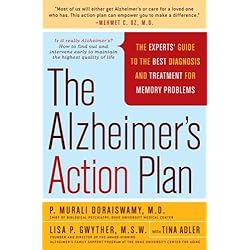
The Alzheimer's Action Plan: The Experts' Guide to the Best Diagnosis and Treatment for Memory Problems

Bob DeMarco is an Alzheimer's caregiver and editor of the Alzheimer's Reading Room. The Alzheimer's Reading Room is the number one website on the Internet for advice and insight into Alzheimer's disease. Bob taught at the University of Georgia, was an executive at Bear Stearns, the CEO of IP Group, and is a mentor. He has written more than 700 articles with more than 18,000 links on the Internet. Bob resides in Delray Beach, FL.

The Alzheimer's Action Plan: The Experts' Guide to the Best Diagnosis and Treatment for Memory Problems

Bob DeMarco is an Alzheimer's caregiver and editor of the Alzheimer's Reading Room. The Alzheimer's Reading Room is the number one website on the Internet for advice and insight into Alzheimer's disease. Bob taught at the University of Georgia, was an executive at Bear Stearns, the CEO of IP Group, and is a mentor. He has written more than 700 articles with more than 18,000 links on the Internet. Bob resides in Delray Beach, FL.

Original content the Alzheimer's Reading Room

Wednesday, August 12, 2009

Alzheimer's Reading Room Flashback

Americans Fear Alzheimer’s More Than Heart Disease, Diabetes or Stroke
A study by the MetLife Foundation found that Americans fear getting Alzheimer's disease more than heart disease, stroke, or diabetes. Alzheimer's ranks second in the minds of American's only to cancer.
To continue reading go here.

The Seven Stages of Alzheimer's
Experts have documented common patterns of symptom progression that occur in many individuals with Alzheimer’s disease and developed several methods of “staging” based on these patterns.
To continue reading go here.

James Smith: I'm 45 Years Old, I can't have Alzheimer's
My doctors initially diagnosed it as possible depression. I accepted the diagnosis, and started taking the medications they prescribed. The medications didn’t change the symptoms, even after taking them for several months. Also, the doctors noted that I didn’t seem to exhibit other signs of depression.
To continue reading go here.

Keeping time with Alzheimer's
"When guilt catches up with me, I am on the bike path above the creek, ducks swimming along beside me. Guilt rolls off our backs like you know what. Alone at last, I walk at my own pace. Fast. Fast is what Ben can no longer do -- and fast is slow compared with the woman coming toward me as I near the marsh. She is wearing shorts and earphones. She smiles and I smile back. What a good idea this is, walking out in the sun and cold. What could produce better clarity? I don't have to work it out the first day. I don't have to do it right the first time."
To continue reading go here.

Original content the Alzheimer's Reading Room

Thursday, August 06, 2009

Meet Angil Tarach RN

Follow the link link in the clip to AnnArbor.com to continue reading.
clipped from www.annarbor.com

Currently there are between 45 and 60 million people providing care for a loved one in the US. As 77 million Baby Boomers age that number is expected to more than double.
I see families on a daily basis who have found themselves facing an unexpected illness or injury with a spouse, parent, or loved one, and are struggling to figure out the healthcare maze. I believe knowledge is power. The focus of my blogs will be to help people in our community by sharing 30+ years of my experience and education, so they are better equipped to handle and make decisions, and reduce their stress level, if or when they find themselves facing a crisis.

I have spent time with thousands of seniors and their families. Every person and family is unique, and has their own unique set of circumstances, but the situations they face are common among our senior population.
we as a nation need to provide better care and treatment of our older citizens.
Carlton and me.jpg
 blog it