Sunday, June 28, 2009

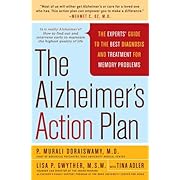
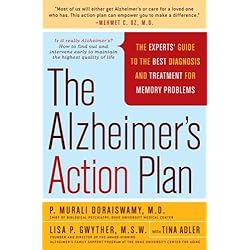
The Alzheimer's Action Plan

“Most of us will either get Alzheimer’s or care for a loved one who has"
"This book is the most comprehensive and up-to-date guide for the diagnosis and management of Alzheimer's disease. Whether you are a health care professional or have Alzheimer's in your family or are simply interested to living to an old age, this book is a must read."
--Deepak Chopra, M.D., New York Times bestselling author of Perfect Health: The Complete Mind/Body Guide


Insight and Advice about Alzheimer's Disease
Subscribe to The Alzheimer's Reading Room
"Memory does matter. Adults across the life cycle are asking questions, many questions! The authors answer these questions for the educated public, family members who encounter memory loss in a loved one, and even adults who believe they are experiencing early memory loss. The answers are comprehensive and understandable, no small accomplishment given the plethora of new information available—information that at times is not only confusing but also conflicting."
--Dan G. Blazer, M.D., Ph.D., former Dean of Medical Education, Duke University School of Medicine; past President of the American Geriatrics Society
"Dr. Doraiswamy has done a masterful job of communicating what the layman should know on the treatment, the care giving and, most important, the prevention of Alzheimer's. It was gratifying to learn about the mountain of evidence that what is good for your heart is also good for your brain."
--Arthur Agatston, M.D., cardiologist and #1 New York Times bestselling author of The South Beach Diet
"I love this book! A powerful and vital resource for people who need it the most. Dr. Doraiswamy is that unique blend of medical expertise mixed in with warmth and compassion topped off with humility that makes him rare and wonderful."
--Leeza Gibbons, Emmy award-winning TV host and founder of Leeza's Place and the Memory Foundation
"Lisa Gwyther is a national treasure. She has been a pioneer in providing innovative care and education for Alzheimer’s patients and their families for many years. Lisa’s long experience helping families cope with the challenges of memory loss and Alzheimer’s disease makes her uniquely qualified to co-author this book. Families experiencing the new world of memory loss and Alzheimer’s couldn’t ask for a better companion for the journey. Her warmth, compassion, and wisdom shine through, and will help light the way."
--Pat Lynch, Director of Communications, Alzheimer’s Center Program, National Institute on Aging
"Most of us will either get Alzheimer's or care for a loved one who has. This action plan can empower you to make a difference."
--Mehmet C. Oz, M.D., co-author of the #1 New York Times bestseller, You: The Owner’s Manual
"Five million Americans have Alzheimer disease, and an even larger number with mild to moderate memory loss are at high risk of developing this illness. Murali Doraiswamy, a leading clinical researcher in Alzheimer disease, and Lisa Gwyther, a founder of the Alzheimer Association, have co-authored this timely, state-of-the-art book directed at patients with Alzheimer disease, their informants, and their primary care physicians....I fully predict that this exceptionally well-written, reader-friendly book will become the standard resource for patients with Alzheimer disease and their loved ones. Its up-to-date information, patient-centered approach, and focus on prevention and treatment directed at patients with incipient Alzheimer disease distinguish it from The 36 Hour Day by Nancy Mace and Peter Rabins, which is directed at caregivers of patients with moderate to severe Alzheimer disease."
--JAMA (Journal of the American Medical Association)

Bob DeMarco is an Alzheimer's caregiver and editor of the Alzheimer's Reading Room. The Alzheimer's Reading Room is the number one website on the Internet for advice and insight into Alzheimer's disease. Bob taught at the University of Georgia, was an executive at Bear Stearns, the CEO of IP Group, and is a mentor. He has written more than 700 articles with more than 18,000 links on the Internet. Bob resides in Delray Beach, FL.

More from the Alzheimer's Reading Room


Original content the Alzheimer's Reading Room

Follow the Alzheimer's Reading Room on Twitter

Sunday, June 14, 2009

Questions About Test Your Memory (TYM) for Alzheimers and Dementia

On Wednesday, I published an article about a new memory test for Alzheimer's that can be administered in five minutes. The links to the test and scoring sheet are contained in the original article -- Test Your Memory (TYM) for Alzheimer's or Dementia in Five Minutes.

I am receiving emails from readers and I thought I would address two questions.

One reader asked, "I am curious to hear their opinion, about the level of education for the test taker, and its effect on the validity of the test".

The authors did not specifically assess the effect of education during their testing. In the BMJ article they wrote,
This ceiling effect suggests that education and social class would have only mild effects on the TYM score, but we did not formally assess this. The reason for the low scoring controls was often apparent from the score sheet—lack of interest, reading problems, or a sense of humour.
I will try to talk to researchers and get a clearer answer to this question.

Several readers are asking about the scoring system for the test.
  • The control group scored 47 out of 50 (ages 18-70).
  • A score equal to, or less than, 42 detects Alzheimer's 93 percent of the time.
  • Patients with Alzheimer's scored 33 out of 50.
  • The range of scores for patients with Alzheimer's was 9-50.
The main finding of this research
The new "test your memory" (TYM) test is quick to use, examines 10 cognitive skills, and detects 93% of cases of Alzheimer’s disease.
If you would like to read the highly technical paper which was published in the BMJ follow this link -- Self administered cognitive screening test (TYM) for detection of Alzheimer’s disease: cross sectional study.

Have a question, put it in the comments box.

This is the first draft of this article and it will be updated.
For more Insight into Alzheimer's Disease
Subscribe to The Alzheimer's Reading Room

Bob DeMarco is an Alzheimer's caregiver and editor of the Alzheimer's Reading Room. TheAlzheimer's Reading Room is the number one website on the Internet for insight into Alzheimer's disease. Bob taught at the University of Georgia, was an executive at Bear Stearns, the CEO of IP Group, and is a mentor. He has written more than 600 articles with more than 11,000 links on the Internet. Bob resides in Delray Beach, FL.


More from the Alzheimer's Reading Room

Tuesday, June 09, 2009

Does Loneliness cause an Alzheimer's like Dementia ?

Loneliness may put people at risk of an Alzheimer's-like dementia.

"People who described themselves as lonely were twice as likely to develop dementia," says researcher Robert Wilson of the Rush University Medical Center in Chicago.
Research suggests lonely people are at greater risk of developing dementia. Seniors who scored high on the loneliness quiz agreed with three or more of the following scenarios:
  • I experience a general sense of emptiness.
  • I miss having people around.
  • I feel like I don't have enough friends.
  • I often feel abandoned.I miss having really good friends.
Source: Robert Wilson at the Rush University Medical Center in Chicago
For more Insight into Alzheimer's Disease
Subscribe to The Alzheimer's Reading Room

Source USA Today

By Kathleen Fackelmann, USA TODAY

Loneliness may put people at risk of an Alzheimer's-like dementia, a study reported.
"People who described themselves as lonely were twice as likely to develop dementia," says researcher Robert Wilson of the Rush University Medical Center in Chicago.

Other studies have found that people who are unmarried and socially isolated are at higher risk for dementia, including Alzheimer's. But this study is one of the first to show a link between loneliness — or the feelings of disconnection from other people — and a higher risk of developing dementia late in life, says Laurel Coleman, a spokeswoman for the Alzheimer's Association and a geriatrician in Portland, Maine.

Wilson and his colleagues studied 823 people who were about 80 years old and had no sign of dementia at the start of the study. The team gave the recruits a loneliness quiz and tested them annually for signs of memory loss and confusion, two key signs of dementia and Alzheimer's.

During the four-year study, 76 people developed an Alzheimer's-like dementia, Wilson says. The risk of developing dementia increased about 51% for each one-point increase on the loneliness scale. People with the highest scores had 2.1 times the risk of developing dementia, a group of conditions that destroy brain cells and lead to mental confusion. Alzheimer's is the most common form of dementia.

Autopsies were performed on 90 people who died during the study. The researchers found no link between loneliness and the development of the abnormal brain deposits that are the hallmark of Alzheimer's.

That finding suggests loneliness might be triggering dementia through a novel mechanism — one that doesn't lead to a brain riddled with deposits, Wilson says.

One theory is that people who are lonely over long periods of time might have higher levels of damaging stress hormones. The elevated stress hormones might lead to an accelerated aging of the brain — and perhaps to dementia, Wilson says.

Other research suggests lonely people are at risk of other health problems such as cancer and high blood pressure, says John Cacioppo of the University of Chicago. Still, he says, the new finding, which appears in February's Archives of General Psychiatry, must be verified by additional research.

The findings didn't change much when the team factored in markers of social isolation, such as infrequent participation in social events. That means that people who have a small number of good friends might be better off than those with a busy social schedule but chronic feelings of loneliness, Wilson says.

But lonely people often benefit from signing up for a new class or activity, Coleman says. Research shows that such activities might protect aging brain cells. And seniors who are out and about are more likely to make new friends, which might lessen feelings of loneliness, she says.

Bob DeMarco is an Alzheimer's caregiver and editor of the Alzheimer's Reading Room. The Alzheimer's Reading Room is the number one website on the Internet for insight into Alzheimer's disease. Bob taught at the University of Georgia, was an executive at Bear Stearns, the CEO of IP Group, and is a mentor. He has written more than 600 articles with more than 11,000 links on the Internet. Bob resides in Delray Beach, FL.


More from the Alzheimer's Reading Room


Original Content the Alzheimer's Reading Room

Wednesday, June 03, 2009

Should Women Be Worried about Alzheimer's ?

Current statistical studies indicate that at age 80, there is a one in five chance of suffering from Alzheimer's disease (20 out of 100).

At age 85, the odds rise to one out of every two (50 out of 100). I call this the Alzheimer's danger zone.

It is well known that women live longer than men. But, I don't think it is well known that healthy women live much longer than healthy men, and live into the Alzheimer's danger zone.
Women who reach the age of fifty without suffering from cancer or heart disease can expect to live nearly ninety-two years (92).**
Men who live to age sixty-five without suffering from cancer or heart disease, can expect to live to eighty-one (81).