Friday, May 29, 2009

Side Effects of Alzheimer's and Dementia Drugs

There is a new study published in the journal, Archives of Internal Medicine that caught my attention.

The study showed that users of cholinesterase inhibitors like Aricept, Exelon and Reminyl are more likely to experience slower heart rates and a higher rate of feinting episodes.

In the case of my mother, her heart rate has slowed, and this disturbed me until I discused the issue with her personal care physician. He told me what to watch for and how to monitor the situation.

My mother is not feinting. However, I know other Alzheimer's caregivers that have experienced this problem, and as a result, live in a perpetual state of angst.

Feinting leads to frequent 9-1-1 calls, and also brings risk such as the dreaded broken hip. Feinting is certainly a cause for concern.

Most of us would conclude that feinting is caused by Alzheimer's and not a problem brought on by the drug (s). This new study highlights the potential side effects of cholinesterase inhibitors.

The scientists are not suggesting that Alzheimer's patients stop taking cholinesterase inhibitors, and neither am I.

However, if you are experiencing these problems you might want to discuss these issues with your personal care physician or a specialist.
"This study does not suggest that dementia patients shouldn't take these drugs," says Dr. Gill. "What's critical is that patients, caregivers and physicians be aware of the potential side effects, and weigh these risks carefully against the potential for beneficial effects."
To receive more information about Alzheimer's -- Subscribe to The Alzheimer's Reading Room

Dementia drugs may put some patients at risk, Queen’s study shows

Side effects associated with several commonly-prescribed dementia drugs may be putting elderly Canadians at risk, says Queen's University Geriatrics professor Sudeep Gill.

Cholinesterase inhibitors (Aricept, Exelon and Reminyl) are often prescribed for people with Alzheimer's disease and related dementias because they increase the level of a chemical in the brain that seems to help memory. Although such drugs are known to provoke slower heart rates and fainting episodes, the magnitude of these risks has not been clear until now.

"This is very troubling, because the drugs are marketed as helping to preserve memory and improve function," says Dr. Gill, who is an Ontario Ministry of Health and Long-term Care Career Scientist, working at Providence Care's St. Mary's of the Lake Hospital in Kingston. "But for a subset of people, the effect appears to be the exact opposite."

In a large study using province-wide data, Dr. Gill and his colleagues discovered that people who used cholinesterase inhibitors were hospitalized for fainting almost twice as often as people with dementia who did not receive these drugs. Experiencing a slowed heart-rate was 69 per cent more common amongst cholinesterase inhibitor users. In addition, people taking the dementia drugs had a 49 per cent increased chance of having permanent pacemakers implanted and an 18 per cent increased risk of hip fractures.

Unfortunately, Dr. Gill continues, this class of drugs is one of the few effective dementia treatments available today. Acknowledging that these drugs do have an important role in the management of dementia, he suggests that people who are already at a higher risk (for example, those who have had previous episodes of fainting or slowed heart rate) may want to ask their doctors to reassess the value of taking the drugs.

Slowing of the heart rate from cholinesterase inhibitors, if significant, may cause a person to faint and suffer fall-related injuries such as a broken hip - often debilitating and sometimes fatal for seniors. However, many physicians aren't aware of the connection between these problems and the dementia drugs, Dr. Gill notes.

If the association with dementia drugs is not identified, people who faint may be prescribed a permanent pacemaker: an invasive procedure that can involve serious complications for seniors. Both the injuries incurred from falling and the risks from pacemaker implants are "downstream consequences" of not recognizing this drug-induced phenomenon.

"This study does not suggest that dementia patients shouldn't take these drugs," says Dr. Gill. "What's critical is that patients, caregivers and physicians be aware of the potential side effects, and weigh these risks carefully against the potential for beneficial effects."

The findings are published in the journal, Archives of Internal Medicine. Scientists from the Institute for Clinical Evaluative Sciences, the University of Toronto and Harvard University are also on the research team.

The study uses data housed at the Institute for Clinical Evaluative Sciences (ICES). Ontario's first satellite unit of ICES was established at Queen's in 2007 to provide university researchers with electronic access to Ontario health datasets and population registries by secured and encrypted lines. Areas of focus at Queen's include cancer, pharmacological studies and dementia.

Contacts: Nancy Dorrance, 613.533.2869 nancy.dorrance@queensu.ca or Jeff Drake, 613.533.2877, jeff.drake@queensu.ca Queen's News and Media Services

Bob DeMarco is an Alzheimer's caregiver and editor of the Alzheimer's Reading Room. The Alzheimer's Reading Room is the number one website on the Internet for insight into Alzheimer's disease. Bob taught at the University of Georgia, was an executive at Bear Stearns, the CEO of IP Group, and is a mentor. He has written more than 600 articles with more than 11,000 links on the Internet. Bob resides in Delray Beach, FL.


More from the Alzheimer's Reading Room


Follow the Alzheimer's Reading Room on Twitter

Saturday, May 16, 2009

Thyroid and Alzheimer's

Read the complete article at the Alzheimer's Reading Room.
I wish I could shout this from the mountain top: "when Alzheimer's or dementia present themselves get the thyroid checked".


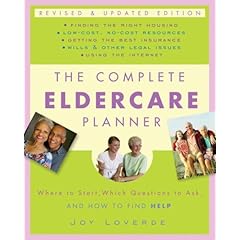
The Complete Eldercare Planner, Revised and Updated Edition: Where to Start, Which Questions to Ask, and How to Find Help

Sunday, May 10, 2009

The Memory Loss Tapes --Comments and Reactions Wanted

This is a good time to share information, knowledge, personal experience, and advice with others.
Once you have viewed the Memory Loss Tapes feel free to enter your comments and reactions.
If you would like me to put your question up as a separate post -- send it to me via email and I will.

Feel free to share the link to this article with friends, family, and other interested parties -- http://www.alzheimersreadingroom.com/2009/05/memory-loss-tapes-comments-and.html
 blog it

Saturday, May 09, 2009

Watch the Memory Loss Tapes Now on the Internet (HBO Streaming Video)

Alzheimer's Reading Room: Watch the Memory Loss Tapes Now on the Internet (HBO Streaming Video)

You can watch the Memory Loss Tapes on the Internet Right now.

To see it go to HBO The Memory Loss Tapes
Subscribe to The Alzheimer's Reading Room--via Email

The Memory Loss Tapes takes an intimate look at seven individuals living with Alzheimer’s, seeking to introduce a new understanding by sharing the devastating experience of memory loss from the point of view of the person with the disease.

Grandpa, Do You Know Who I Am? With Maria Shriver is geared toward children and young teens coping with a grandparent’s illness, and presents vignettes that can help a child understand and deal with a relative’s gradual decline into Alzheimer’s.

Momentum in Science is a two-part, state-of-science odyssey that takes viewers inside the laboratories and clinics of 25 leading physicians, revealing some of the most cutting-edge Alzheimer research advances.

Caregivers is a collection of five family portraits that illustrate caring for the different stages of Alzheimer’s disease.

Bob DeMarco is a citizen journalist and Caregiver. In addition to being an experienced writer he taught at the University of Georgia , was an Associate Director and Limited Partner at Bear Stearns, the CEO of IP Group, and a mentor. Bob currently resides in Delray Beach, FL where he cares for his mother, Dorothy, who suffers from Alzheimer's disease. He has written more than 500 articles with more than 11,000 links to his work on the Internet. His content has been syndicated on Reuters, the Wall Street Journal, Fox News, Pluck, Blog Critics, and a growing list of newspaper websites. Bob is actively seeking syndication and writing assignments.


More from the Alzheimer's Reading Room


Follow the Alzheimer's Reading Room on Twitter

Thursday, May 07, 2009

Will President Obama put an End to the Medicare Rip-Off?

I bet you didn't know this.

When your elected representatives in Washington voted on the Medicare Modernization Act of 2003 they slipped in this dilly -- when Medicare buys prescription drugs from the pharmaceutical companies they are not allowed to negotiate the price they pay.

Let me put it this way, we the taxpayers pay full retail price when Medicare buys prescription drugs -- for us.

Now here is the part that is really odd. These same Washington politicians allow Medicaid and the Veterans Administration to negotiate purchases. Medicaid often pays 40 percent less than Medicare pays for the same exact prescription drug.

I can buy a 16 ounce can of Old El Paso refried beans in Publix for a $1.49. Or, I can go to Walmart and buy the same product in the same size for $1.09. I have a choice -- Medicare doesn't.

This leaves me wondering? What would happen if the buyers from Walmart were the buyers of prescription drugs for Medicare?

You can read the complete article by following this link.

Will President Obama put an End to the Medicare Rip-Off?

Wednesday, May 06, 2009

Tuesday, May 05, 2009

The Complete Eldercare Planner, Revised and Updated Edition

I read the original edition and the book has now been revised. It is worthwhile reading and contains lots of useful information. I found it helpful. Here are some of the areas covered in the book.
  • Getting started on creating a long-term care plan.
  • How to find help, especially if you live far away.
  • Managing financial aspects of the situation.
  • How to talk to elders about sensitive subjects.
  • Addresses issues surrounding senior housing–move or stay put?
  • Managing medications.
  • Several other topics that are of interest to anyone caring for an elder.


The Complete Eldercare Planner, Revised and Updated Edition: Where to Start, Which Questions to Ask, and How to Find Help
Subscribe to The Alzheimer's Reading Room--via Email

Editorial Reviews
Product Description

As our population shifts and ages, the care needs for our elders continue to change and evolve. Today’s generation of family and professional caregivers faces new decisions and challenges, as well as previously unavailable options. This thoroughly revised and updated 2009 edition of The Complete Eldercare Planner equips you with reliable, up-to-the-minute information to help you plan and manage caring for your loved ones.

Comprehensive and detailed, sensitive and realistic, practical and accessible, the 2009 edition provides even more tips on prioritizing and organizing caregiving tasks, balancing work and family responsibilities, and navigating the complex maze of eldercare services. In addition to an expanded index of Internet resources and access to downloadable forms of key documents, you’ll find indispensable checklists, worksheets, step-by-step action plans, lists of questions to ask, low-cost and free alternative resources, and The Document Locator™.

About the Author

JOY LOVERDE, a leading consultant in the senior/active adult industry for thirty years, shares her expertise with family members and professionals who want to successfully plan and manage eldercare and caregiving issues. Her work has been featured on Today, the CBS Early Show, National Public Radio, and in USA Today, the Wall Street Journal, and Consumer Reports.

Follow the Alzheimer's Reading Room on Twitter
Sunday, May 03, 2009

How I Manage My Caregiver Stress

Right now, I feel that caregiver stress coming on. I can best describe the feeling as being disconcerted.

My mother has been suffering from severe headaches for two weeks. They are of the type that could indicate a stroke. So, this has me disconcerted.

We are working very hard with our doctor to get to the bottom of the problem. The verdict on the cat scan will be in soon.

Sometimes when things get on the crazy side, I go back and look at my owncaregiver stress list. More or less, give myself some advice.

Now, I 'll share my advice. Please feel free to add to my list.
One of the biggest problems faced by caregivers is depression. As a result, caregivers should take care to insure that they remain healthy and on mission. Over the years, I have referred to this list of mine many times. The list helps to put me in focus, and reminds me that I need to take care of myself. Please feel free to email this to others.
  • Don’t take on more responsibility than you can handle. Learn to ask for help when you need it. Consider putting together a team of friends and relatives to share the burden. Don't go it alone.
  • You need to find ways to relax and reduce stress. Consider trying: meditation, visualizing comforting or pleasant scenes, listening to music, reading, or playing games on a computer.
  • Learn to make lists so you can get to the more important tasks first. Focus on one thing at a time. If you start to feel overwhelmed learn how to pass off tasks to others when they ask, "how can I help". Remember to compliment, or even congratulate, yourself when you accomplish an important task.
  • Pay close attention to your own health. Eating nutritious meals and exercising is a must. Make sure you are getting enough sleep. Take care of yourself.
  • You need to carve out time to do things that you enjoy. This is not only necessary for your own well-being, it will make you more effective in your caregiving effort.
  • You need family, friends and loved one's you can talk to about your frustrations and successes. You need to let it come out. Learn to identify people that will willingly listen. And, I mean LISTEN.
  • One of the most difficult things to do is to get educated. You can never know enough about your loved one's condition. You never know when you are going to learn something that can make a big difference. Information is empowering and brings with it the feeling that you are taking control; rather then, being controlled by an illness or the situation. Learning something new that improves your caregiving is very rewarding and empowering.
  • Join a support group. In a good support group you will learn valuable lessons, get new ideas, and tips that can really make a difference. In a good support group you get to "vent" with real people that understand where you are "coming from". Most importantly, in a good support group you will learn over and over "you are not alone".
  • Make sure you see your own doctor. Watch out for feelings of stress. Talk to your doctor about stress and stress reduction methods.
  • Search your community for resources that are available to you. Is their a good senior center available? If so, schedule an appointment to talk with them. If you have never heard of this dial 2-1-1. If this service is available in your area they have groups of trained professionals that can get you direct to the resources you need. It's free.

  • Don't hesitate to contact your local university wellness center. You might be surprised to learn that most Universities are a wealth of information and services. They might be conducting research or studies that could be beneficial to you.
Subscribe to The Alzheimer's Reading Room--via Email
Bob DeMarco is a citizen journalist and Caregiver. Bob currently resides in Delray Beach, FL where he cares for his mother, Dorothy, who suffers from Alzheimer's disease.


The Myth of Alzheimer's: What You Aren't Being Told About Today's Most Dreaded Diagnosis


Follow the Alzheimer's Reading Room on Twitter