Thursday, January 31, 2008

7 Caregiver Tips


Its a tough job. Seven tips to remember and use.


Carolyn Clifford / WXYZ Channel 7 Action News

Every 72 seconds, someone develops Alzheimer's disease. And each one of those patients will need one or more people to serve as caregivers. That can be emotionally and physically draining. So here are seven ways to remain healthy while caring for a loved one.

1. Become an educated caregiver. As the disease progresses, new caregiving skills are necessary. Seminars, books and publications can help you better understand and cope with the behaviors and personality changes that often accompany Alzheimer's

2. Get help. Doing everything yourself can leave you exhausted. Support groups and the Alzheimer's Association Help Line are good sources of comfort and reassurance. If stress becomes overwhelming, seek professional help.

3. Take care of yourself and manage your level of stress. Watch your diet and exercise, and get plenty of rest. Make time for shopping, a movie or an uninterrupted visit with a friend.

4. Accept changes as they occur. People with Alzheimer's disease change and so do their needs. They often require care beyond what you can provide on your own. A thorough investigation of options, from a home with assistance to residential care, should make the transition easier.

5. Do legal and financial planning. Plan ahead. Consult an attorney to discuss legal and financial issues including durable power of attorney, guardianship, living wills and trusts, future medical care, housing and long term care insurance.

6. Give yourself credit, not guilt. At times, you may lose patience and find yourself unable to provide all of the care the way you would like. Remember, you are doing the best you can. Don't feel guilty because you cannot do more. Your loved one needs you and you are there.

7. Get started today. Attend a free education film and panel discussion on Alzheimer's and related dementias. "You Are Here" is a feature film by Metro Detroit writer Tim Jeffrey, and was shot in and around Detroit. Ask area experts about caring for a loved one with dementia. This event takes place on Thursdayat Lawrence Technological University. Screenings are at 1 p.m. and 6 p.m. Call (248) 644-8100 for information.

You can watch Action News anchor Carolyn Clifford's Health Edge reports weekdays on WXYZ Channel 7 Action News at 5 p.m.


Find this article at:
http://www.detnews.com/apps/pbcs.dll/article?AID=/20080129/LIFESTYLE03/801290400
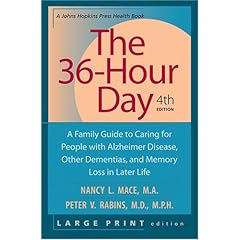

The 36-Hour Day: A Family Guide to Caring for People with Alzheimer Disease and Memory Loss in Later Life


To Cut Medicare Growth, Bush Targets Hospitals

clipped from blogs.wsj.com
Bush’s proposed Medicare budget would cut $15 billion over five years through a reduction of annual updates for inpatient care. It would also cut $25 billion from payments to hospitals serving large numbers of poor people, and $20 billion from payments for capital projects such as putting up new buildings and buying equipment, the New York Times reports.
The president would also cut $1.2 billion from Medicaid next year and nearly $14 billion over five years, according to the NYT. One cost Bush wouldn’t cut: Payments to private insurance companies who manage Medicare Advantage plans, which cost more than traditional Medicare plans.

Medicare and Medicaid accounted for $627 billion in federal spending last year, and the cost of the programs is projected to double in the coming decade, the Times said.

 blog it

Thursday, January 24, 2008

Who Are the Sandwich Generation?

If the term Sandwich Generation leaves you feeling hungry, you may not know about the new buzz surrounding a subset of caregivers nicknamed the “Sandwich Generation”. This colorful name refers to caregivers who find themselves squeezed between caring for younger loved ones (usually children) and elderly parents or family members. This may be nothing new, but these caregivers are becoming a rising interest within American society.
picture2.jpg
Who are the Sandwich Generation?
They are the nearly 10 million boomers that are now raising kids, teenagers or young adults while providing financial support for an aging parent.
According on one survey, 70 percent of the Sandwich Generation are providing care simultaneously for parents and children
“You either are a caregiver, will be a caregiver or someone will be caring for you between now and whenever you die,” Donna Schempp, of the National Family Caregivers Alliance
blog it

Wednesday, January 16, 2008

The Validation Breakthrough: Simple Techniques for Communicating with People with Alzheimer's Type D

Here ya go Sahara.

Thank you for your very nice comments.
You might get the impression from the title that this book is only for professionals; this is not the case. The validation theory works and it is simple to apply. The case studies are invaluable and provide you with specific situations that you are sure to encounter. I am convinced everyone involved with elderly parents suffering from dementia or Alzheimer's will benefit greatly from this book.
If you live with or care for someone with Alzheimer's or other age related dementia, you must read this book ! What an eye-opener! For the first time I finally understood why Alzheimer's patient say what they say and do what they do.
Gives practical ideas and techniques for helping people with dementia deal with issues from paranoia and blaming to sadness and helplessness.
"It works," she told me. "Validation Breakthrough" shows a new way of relating to people with dementia of Alzheimer's type.
I give The Validation Breakthrough five stars
You will certainly reduce stress by learning these technique
 blog it


Buyer Reviews

By Martine Davis

If you live with or care for someone with Alzheimer's or other age related dementia, you must read this book ! What an eye-opener! For the first time I finally understood why Alzheimer's patient say what they say and do what they do. It all makes so much sense now. This small book reads quickly and is full of examples of real people who have been helped with the author's techniques. It shows you how to handle the blaming, accusing, name-calling and the repetitive motions ... It also explains why the way most of us react to Alzheimer's patients actions actually worsens the situation and can cause them to progress to a more advanced stage of Alzheimer's disease ! This book could extend the relationship between the patient and caregivers and should be MANDATORY reading for all staff working in nursing homes and long-term care facilities !

By J. Summers, CNA (Alaska)

An excellent book for both the professional caregiver and families trying to deal with this sometimes unfathomable disease. Gives practical ideas and techniques for helping people with dementia deal with issues from paranoia and blaming to sadness and helplessness. I have just begun to explore these techniques and am finding they work so well that they should be mandatory training for nurses, PCAs and CNAs. Instead of treating our seniors like they are children we at last have a way to talk to them on an adult level, tap into where they are at, deal with the problem at hand and we all come out better for the experience.


Reviewer: A reader

More and more relevant as we care for aging parents. With a title like this one might think: "Boring" Absolutely not so! Right from the start, the stories of the people are so real and so touching that one of my friends said she was moved to tears. She was so sad not to have known about this way of relating to her father. "It works," she told me. "Validation Breakthrough" shows a new way of relating to people with dementia of Alzheimer's type. This approach is effective in helping the person to clear up unresolved issues in their lives. You do not have to be a professionally trained therapist to use validation. Validation will make the relationship more rewarding for both people. It is not hard to learn and makes wonderful sense. Some readers may want to ask new questions of care facilities (like nursing homes) as the validation approach will keep loved ones from slipping into a vegetative state. It will also make the care much kinder, and more rewarding for the care givers


The Validation Breakthrough: Simple Techniques for Communicating with People with 'Alzheimer's-Type Dementia'

A Salute to Caregivers


The 36-Hour Day: A Family Guide to Caring for People with Alzheimer Disease and Memory Loss in Later Life