Monday, September 29, 2008

See the Signs of Alzheimer's-- Free Guide Available

This free guide is an excellent resource and should be especially interesting to baby boomers. The guide includes: information about Alzheimer's disease, information about a prescription treatment option, a doctor discussion guide, and caregiving tips.

While you are on the website obtaining this free resource guide you can also select an option that allows a caregiving nurse to call you and discuss Alzheimer's topics. The nurse can help you identify issues to discuss with your doctor, answer questions about Alzheimer's, and provide you with important tips and resources in your area.

To obtain this free material go to See The Signs.

You can also visit these interesting areas while you are on the website.

Signs & Symptoms

Symptom Screener

Original content the Alzheimer's Reading Room


Wednesday, September 24, 2008

Alzheimer's Reading Room: Combining Alzheimer's drugs helps slow rate of decline in Alzheimer's Patients

My mother is currently moving into the medium stage of Alzheimer's so for us this is exciting news. I intend to send this information to our personal care physician and discuss it with him immediately.

Read this article at the Alzheimer's Reading Room

Monday, September 22, 2008

After ER visit, many patients in a fog, U-M study finds

Four years ago I had to take my 88 year old mother to an emergency room after she fell and clearly broke her finger. We sat there for 8 hours and finally they took her into the back to check her out. Another 30 minutes later they decided they needed to X-Ray her hand. Sure enough her little finger was broken in two places. They wrapped some tape on it and told me she would need to see a specialist. I asked them if they could set it and they said, "NO". After ten hours and thirty minutes they sent us home. Three days later we finally had a referral to a hand specialist. The first thing they did was re-break my mothers finger so they could set it and put a cast on it.

Over the years I learned a sad lesson. Many of my mother's friends visit the emergency room and they have little or no understanding of what they should do next. Often this confusion leads to inaction that leads to a second trip to the emergency room for the same problem.

A new study indicates that three-quarters of those making an Emergency room visit don’t understand either what’s wrong, what was done, or what they should do after leaving emergency room.
Every year, more than 115 million patients enter emergency rooms at hospitals around the nation. And more than three-quarters of them leave with an impression of what happened – or what should happen next – that doesn’t match what their emergency care team would want.


After ER visit, many patients in a fog, U-M study finds

That’s the finding of a new study led by University of Michigan Health System researchers, and published early online in the Annals of Emergency Medicine. The results suggest that emergency room teams need to do a better job of making sure patients go home with clear information and instructions – and that patients and their loved ones shouldn’t leave until they fully comprehend their situation.

The researchers carried out detailed interviews with 140 English-speaking patients who visited one of two emergency departments, and were released to go home. They compared those interviews with the patients’ medical records, and found a serious mismatch between what doctors and nurses found or advised, and what patients comprehended.

What’s worse, patients were pretty sure of what they “knew” 80 percent of the time – even if what they knew wasn’t quite right.

“It is critical that emergency patients understand their diagnosis, their care, and perhaps most important, their discharge instructions," says lead author Kirsten Engel, M.D., a former U-M emergency medicine fellow and Robert Wood Johnson Clinical Scholar who is now at Northwestern University. "It is disturbing that so many patients do not understand their post-emergency department care, and that they do not even recognize where the gaps in understanding are. Patients who fail to follow discharge instructions may have a greater likelihood of complications after leaving the emergency department.”

The study’s senior author agrees. “As a physician, I would like to think I could look someone in the eye and ask: ‘Do you have any questions?,’ and those who were confused or overwhelmed would ask for more help,” says Peter Ubel, M.D., a professor of internal medicine at the U-M Medical School. “This study shows that many patients walk away from important clinical encounters confident that they know what happened and why, but with little reason to be so confident.”

The researchers measured the extent to which patients’ reports agreed with their doctors’ records in four areas: diagnosis, emergency care that was given, post-ER care needs and what kinds of symptoms or signs would require the patient to return to the ER or seek immediate care.

Only 22 percent of patients’ reports were in complete harmony with what their care teams reported on all four counts.

Fifty-eight percent of patients understood at least two of the four areas, but 20 percent were off on three or four areas of their care and follow-up needs.

After asking patients about their diagnosis, care and post-ER instructions, the team also asked them if they were not sure about any of the four areas. Interestingly, patients whose understanding perfectly matched their doctors’ records were just as likely to report being unsure as patients whose understanding was lacking.

“Doctors need to not only ask patients if they have questions, but ask them to explain, in their own words, what they think is wrong with their health and what they can do about it,” says Ubel. “And patients need to ask their doctors more questions, and even need to explain, to their doctors, what they think is going on.”

The biggest area of misunderstanding or lack of comprehension was post-emergency care – that is, what steps the patient needs to take to be seen by their regular doctor or a specialist, how soon to see a doctor, or what medicines or self-care steps they need to take, how to take them, and when.

Ubel, Engel and their colleagues found that 34 percent of the deficiencies in patient comprehension reflected a less-than-complete understanding of what their ER team recommended they do after they left the ER. Meanwhile, 22 percent of the deficiencies in the study had to do with patients’ understanding of what symptoms or changes in their condition should spur them to return to the ER.

Recently, the U-M Health System introduced a program that aims directly at this problem: the Emergency Medicine Consult/Referral Service, run by the Department of Emergency Medicine and the Physician and Consumer Communications division of Public Relations & Marketing Communications.

It is staffed by referral coordinators who follow up with ER patients by phone within 24 hours of their ER visit, to help schedule appointments with U-M physicians for primary or specialty care if the patients’ insurance allows it, or make sure they know that they need to schedule an appointment elsewhere.

More than 12,000 follow-up appointments have been scheduled for recent U-M ER patients since the program began in February 2007, and 81 percent of those patients have arrived for their scheduled appointments, up from 59 percent before the program began. Appointment cancellations are also down.

Before the program began, 24 percent of U-M ER patients who needed a follow-up appointment never scheduled one. And many patients and clinicians who did try to arrange follow-up care went through a frustrating and confusing process that is repeated every day in hospitals around the country. The new call center offers a standardized, centralized way to make sure patients get scheduled to see the provider they need soon after their ER visit.

The new study involved patients from ages 18 to 83 years, 59 percent of whom were women. Nineteen percent of patients were African-American, and 68 percent were white, with the remaining percentage being other races or without a race recorded on their record. Thirty-five percent had a high school education or less. Patients were given a brief cognition test before being interviewed, to make sure their thinking and understanding abilities were normal. In some cases, caretakers were also interviewed.

In addition to Engel and Ubel, who directs the Center for Behavioral and Decision Sciences in Medicine, the new study’s authors include Michele Heisler, M.D., MPA, Dylan Smith, Ph.D., Claire Robinson, MPH, and Jane Forman, M.D. The study was funded by the Robert Wood Johnson Foundation and the U-M Clinical Scholars Program.

Reference: Annals of Emergency Medicine, doi:10.1016/j.annemergmed.2008.05.016
Popular articles on the Alzheimer's Reading Room

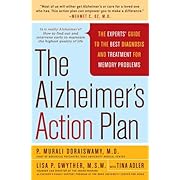
The Alzheimer's Action Plan: The Experts' Guide to the Best Diagnosis and Treatment for Memory Problems

Bob DeMarco is the editor of the Alzheimer's Reading Room and an Alzheimer's caregiver. The Alzheimer's Reading Room is the number one website on the Internet for news, advice, and insight into Alzheimer's disease. Bob has written more than 950 articles with more than 8,000 links on the Internet. Bob resides in Delray Beach, FL.

Original content Bob DeMarco, Alzheimer's Reading Room

Saturday, September 20, 2008

Medicare Part B Premium for 2009 Stays the Same

The Centers for Medicare and Medicaid Services (CMS) announced that the standard Medicare Part B monthly premium will be $96.40 in 2009. This is the same as 2008 and the first time since 2000 that there was no increase in the standard premium over the previous year. This monthly premium applies to beneficiaries who file an individual tax return with income with income equal to or less than $85,000 (or a joint return less then or equal to $170,000). Those in higher income brackets pay higher monthly premiums.

Read the he full release from the Centers for Medicare and Medicaid Services.

Friday, September 19, 2008

Medicare and Home Health Care Booklet

The official government booklet about Medicare home health care benefits for people in the Original Medicare Plan.

View PDF

Tuesday, September 16, 2008

World Alzheimer's Day

Every 71 seconds, someone in America develops Alzheimer's
World Alzheimer's Day, September 21, is a day when Alzheimer's associations around the world concentrate their efforts on raising awareness about Alzheimer's disease and other dementias. Currently there are more than 26 million people across the world living with Alzheimer’s and that number will quadruple by 2050.

If you can, wear purple to work on Friday, September 19 or Monday, September22.


Wednesday, September 10, 2008

Helping those who help others: the Modified Caregiver Strain Index

I found this video to be wonderfully enlightening. I would suggest that all Caregivers and family/friends of caregivers take the time to view this video. Often overlooked, caregivers can suffer from depression. The job tends to wear you down over time.

The Modified Caregiver Strain Index helps to determine the level of strain a caregiver is experiencing. The combination of stress and burden does effect a caregivers' overall health. The index assesses 13 aspects of physical health, family finances, social interactions, time demands, and employment. By identifying the sources and degree of strain, the index can help in the selection of interventions that can be used to alleviate caregivers' strain and improve the lives of caregivers and care recipients.

To watch this free video Helping those who help others follow the link. Please be patient at the start up. While this video was designed for nurses I believe it is useful for anyone trying to understand the issues faced by caregivers. If you suspect a caregiver you know is suffering from depression you will want to see this video. It should serve as a wake-up call for children who have an elderly parent serving as a Caregiver.

Original content The Caregiver

Thursday, September 04, 2008

Caregiving: The Six "R's"

I often get asked question about how I deal with my mother when she evidences erratic behavior.

I read these six coping strategies for dementia-related behavior problems some time ago. Dr. Peter Rabins is a renowned Johns Hopkins neurologist. He touches on the following behaviors: outbursts, agitation, aggression, wandering, vocalizations, hoarding and hiding things, and inappropriate sexual behavior.


Source John Hopkins Health Alerts

People with dementia often exhibit behaviors that are frustrating, embarrassing, and sometimes even dangerous to the caregiver and others. These may include angry outbursts, agitation, aggression, wandering, vocalizations, hoarding or hiding things, and inappropriate sexual behavior. For many caregivers, these difficult behaviors are the most challenging and exhausting aspect of caring for a person with dementia. Unfortunately, the available medications to treat Alzheimer’s disease have little effect on behavioral problems.

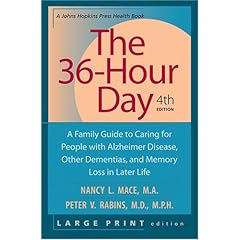
In their groundbreaking book on Alzheimer’s caregiving --The 36 - Hour Day -- Peter Rabins, M.D. (author of the Johns Hopkins Memory White Paper), and Nancy Mace discuss the six R’s of managing difficult behavior in people with dementia. They are:

* Dementia Strategy 1 -- Restrict. First, calmly attempt to get the person to stop the behavior, especially if the behavior is potentially dangerous.

* Dementia Strategy 2 -- Reassess. Consider what might have provoked the behavior. Could a physical problem (toothache, urinary tract infection, osteoarthritis) be behind the agitation or anger? Is a particular person or the noise level in the room triggering the negative reaction? Could the time of day and fatigue be contributing to the problem?

* Dementia Strategy 3 -- Reconsider. Put yourself in the dementia patient’s shoes. Try to imagine what it must be like to not understand what is happening to you or to be unable to accomplish a simple task. Consider how frustrating or upsetting the current situation or environment might be for a person with dementia.

* Dementia Strategy 4 -- Rechannel. Try to redirect the behavior to a safer, less disruptive activity. For example, if the person constantly disassembles household items, try finding simple unused devices, such as an old telephone or a fishing reel, that can be taken apart and put back together repeatedly. For someone who hoards or hides things, put away valuables and replace them with an array of inexpensive items. Distraction often works well to curtail disruptive repetitive behaviors and restlessness. For example, try asking the person you’re caring for to “help” with simple tasks, such as holding spoons or potholders while you cook.

* Dementia Strategy 5 -- Reassure. The demented person’s brain injury and the resulting confusion and frustration can lead to anger, anxiety, and outright fear in certain situations. Calmly reassure the person that everything is okay and that you will continue to take care of him or her.

* Dementia Strategy 6 -- Review. After an unsettling experience with your loved one, take time to review how you managed the problem and what you might have done differently. Think about what may have triggered the problem, how it might have been avoided, and what you might try the next time a similar situation arises. It also helps to create a patient-friendly environment. This might include soothing music in the background; pictures, words, or arrows to help orient the person in the house; or a secure place to sit outside or walk in the backyard.


The 36-Hour Day: A Family Guide to Caring for People with Alzheimer Disease and Memory Loss in Later Life


Great Video Website for Memory, Aging, Alzheimer's and Caregivers

I just discovered this website at the UCSF Memory and Aging Center. The web site is a composite of easy to view video's designed to help people better understand Alzheimer's, dementia and includes caregiver tips. When you enter the website you can click a play list to see all the available content. The site uses YouTube as the delivery system making viewing and listening easy. This is certain to be a go to destination for caregivers and for information about Alzheimer's.

Take a look at this video for Caregivers.