Tuesday, May 27, 2008

Alzheimer's Communication, Take a Few Deep Breaths


When my mother would say something mean, nonsensical or just downright crazy it would bring up emotions like anger in me immediately. Imagine a person being very mean to you and how you might feel. Since I was raised in a feisty Italian-American family it was not unusual for my “temper” to flair.

Alzheimer' and Communication, Take a Few Deep Breaths

When I moved to Delray Beach, Florida to take care of my mother one of my most difficult problems was learning how to communicate with her. If you have cared for a person suffering from Alzheimer’s or dementia you know how difficult this can be.

When my mother would say something mean, nonsensical or just downright crazy it would bring up emotions like anger in me immediately. Imagine a person being very mean to you and how you might feel. Since I was raised in a feisty Italian-American family it was not unusual for my “temper” to flair. If I reacted the way I had in the past my mother would either get “meaner”, or she would go into her room and stay there for hours on end often refusing to speak. I would end up with a pain in my stomach and a range of feelings that included a sense of hopelessness. I realized during those first days that I needed learn how to deal effectively with this new, unfamiliar, communication with my mother.

The first thing I decided to do was work very hard to learn a new set of skills when these situations occurred. I learned to label (identify) and accept my initial reaction. What was I feeling: anger, frustration, confusion, sadness or a combination of all of these feelings? I found that by identifying my feelings I could corral and contain them so I could deal effectively with my mother and the situation at hand. Once I had my mother settled I would go into a separate room and let my feeling come to the surface. First identify, second feel and third dismiss these feeling as part of the sometimes craziness called Alzheimer’s disease. I know my mother didn’t mean what she was saying and I knew from my previous 50 years with her that she would never say or do the things she was doing if she could help it.

As I was learning, I read an article about taking a “few deep breaths”. I tried it. Before I knew it, I was able to use this technique to blow away all the bad feelings and find myself relieved. I also learned to take a few deep breaths once the communication episode with my mother was starting. This really helped put me in focus and remind myself about what needed to be accomplished.

So my advice to you is to learn how to take a few deep breaths. Nice and slow deeper and deeper breaths. It works.

I learned to accept my initial reaction to these situations as part of being human. In other words, I came to understand that it was OK to have my feelings, my emotions. I also learned that I needed to keep these feelings in check and find a way to diffuse the anger within me. I came to understand that my mother was now evidencing behavior that was a result of her own confusion and the deterioration taking place in her brain. I came to accept the Alzheimer’s disease for what it is—something mean and sinister that was not going to go away. I learned to take control of the situation at hand.

You can do it too, I know you can.

Original source: I am an Alzheimer's CareGiver


Wednesday, May 21, 2008

Day Care for older dementia patients: favorable effects on behavioral and psychological symptoms and caregiver stress

This is a clip of a research study.

The conclusions are important and indicate that day care can be effective in reducing behavioral and psychological symptoms of dementia patients. Also alleviates caregiver burden.

My own experience shows that social interaction does have a very positive effect on my mother and her behavior.

Objective
To assess the effects of Day Care (DC) on older subjects with dementia and their caregivers.

Methods
Thirty patients with dementia, consecutively admitted to a DC, were compared with 30 patients, matched for age and cognitive function, who received usual home care (HC).
Results
After adjusting for potential confounders, NPI score significantly decreased in DC group, with a reduction of psychotropic drugs prescription, whereas it increased in HC. No significant between-group difference was observed for cognitive and functional change. CBI significantly decreased in DC, but not HC, caregivers, with no significant between-group difference in depressive symptoms change.
Conclusions
A 2-month period of DC assistance is effective in reducing behavioral and psychological symptoms of dementia patients and in alleviating caregivers' burden. Copyright © 2008 John Wiley & Sons, Ltd.
 blog it

Health Tip: Keeping the Caregiver Healthy

Eating healthy and exercise are of paramount importance.
clipped from www.medicinenet.com

Caregiving is one of the toughest jobs around. It is both emotionally and physically draining.

The American Heart Association offers these suggestions for those who assist others to help them feel energized, refreshed and happy:

  • Make exercise a regular part of your life, even if it's just a quick walk a few times a day.
  • Eat healthy meals and snacks — whole grains, lean meats, fruits and vegetables — anything that's good for your heart can help ward off depression.
  • Every day, take a few minutes to do something that makes you happy or allows you to relax — listening to music, reading, taking a hot bath, or anything you enjoy.
  • Laugh as much as you can.
  • Take some time for yourself to get away each week, even if only for an hour or so.
  • Look for signs of depression, and treat them promptly.
  • Stay organized and on top of projects to keep from feeling overwhelmed.

— Diana Kohnle

 blog it

Alzheimer's Caregivers

I recently received my copy of Alzheimer's Caregivers . This free handbook and tip sheet is well worth obtaining. You can get up to three free copies so its also easy to share. Get your free copy.


If you obtain the handbook, please let me know your reaction. Feel free to email this post to your friends and relatives.


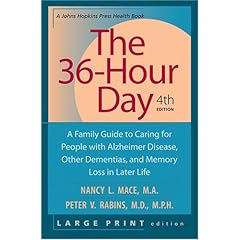
The 36-Hour Day: A Family Guide to Caring for People with Alzheimer Disease and Memory Loss in Later Life


Saturday, May 17, 2008

Wii Fit

This is an excellent article about the new fitness module for Wii. I am considering getting this for my mother who suffers from Alzheimer's. Along with this I hope to get friends to come over and bowl with her.

This would satisfy two important needs: exercise and social interaction. Follow the link to read the article.

I'll let you know.
clipped from www.nytimes.com
Exercising with Wii Fit is like having a Bob Harper or a Denise Austin who talks back — gently cajoling you through exercises, praising, nudging, even reminding you to eat a banana once in a while. It also lets you see how you stack up against friends or family members; each user creates a cartoony avatar called a “Mii.”

Friday, May 09, 2008

Most Americans can’t spot stroke warning signs

clipped from www.msnbc.msn.com
Less than half of Americans can recognize the top five warning signs of stroke, information that could help save thousands of people from death and disability, the U.S. Centers for Disease and Control and Prevention said on Thursday.
These findings indicate a need to increase awareness of stroke warning symptoms in the entire population
Stroke warning signs include sudden numbness or weakness of the face, arm or leg, especially on one side; sudden confusion or difficulty speaking; sudden trouble walking, dizziness or loss of balance; sudden trouble with vision in one eye or both; and severe headache with no known cause.
 blog it

Thursday, May 08, 2008

The Caring Today Contest

"The Caring Today contest is a way for caregivers to get the word out about their experiences," said Strecker Richard. "We are honored to provide family caregivers a chance to be heard and to support these dedicated, under-recognized heroes. We're excited that Home Instead Senior Care is offering $16,000 worth of relief to the people who really need it."


Do You Need a Caregiving Break Today?

Caring Today Magazine and Home Instead Senior Care Launch Third Annual
Essay Contest
Contest will reward winning caregivers with $16,000 in much-needed support


FAIRFIELD, Conn., May 8 /PRNewswire/ -- It's time for a break for
America's unsung heroes, the 50 million American caregivers who work
tirelessly on behalf of their loved ones, according to Caring Today
magazine, the Number One resource for family caregivers.

That's why Caring Today magazine (http://www.caringtoday.com), and Home
Instead Senior Care are today announcing the third annual Caring Today
magazine's "Give a Caregiver a Break" essay contest. Some 50 million
Americans act as family caregivers, providing non-paid assistance for a
family member or friend who needs support, guidance and/or physical help
with health and medical decisions.

A 2007 nationwide Caring Today survey found that while caregivers take
pride in their accomplishments many find the responsibility can take a
physical and financial toll, said Susan Strecker Richard, Editor-in-Chief
of Caring Today.

"The Caring Today contest is a way for caregivers to get the word out
about their experiences," said Strecker Richard. "We are honored to provide
family caregivers a chance to be heard and to support these dedicated,
under-recognized heroes. We're excited that Home Instead Senior Care is
offering $16,000 worth of relief to the people who really need it."

The contest offers family caregivers the opportunity to write about
their experiences, and winners will be awarded with much-needed help. Grand
prize for the essay contest is $5,000 worth of free care from Home Instead
Senior Care, the world's largest provider of non-medical companionship and
home care for seniors. Two first prize winners will each receive $2,500
worth of care from Home Instead Senior Care, and 12 "Extraordinary
Caregivers" will receive $500 each in service.

"Each day, our CAREGivers see the toll that caregiving takes on
families across the world," said Home Instead Senior Care Co-Founder and
CEO Paul Hogan. "We know that respite care is one of the biggest benefits
to the family caregiver, which is why we're proud to be a sponsor of this
contest that will provide needed rest and support to weary family
caregivers."

To enter the contest, family caregivers are asked to describe their
caregiving experiences, including the challenges they've faced, how they've
embraced their role as a caregiver for a senior loved one and inspired
others, and how a Home Instead CAREGiver(SM) could make a difference.
Entries, which must be 500 words or fewer, can be submitted starting May 1,
2008. Entry deadline is July 16, 2008.

Winning essays will be published in the November/December issue of
Caring Today, both online and in the magazine. Videos of the winners will
be posted on CaringToday.com.

Contest details are available on Caring Today's Facebook group page
(http://www.facebook.com/group.php?gid=22731175184&ref=ts), and on the
Caring Today website (http://caringtoday.com), and on the Home Instead
Senior Care website (http://www.homeinstead.com).

About Caring Today, LLC:

Caring Today, LLC, through its magazine and website, is the leading
provider of practical advice and resources for family caregivers. Since
2004, the Connecticut-based multiplatform media company has been delivering
expertise and support to the estimated 50 million American family
caregivers through http://www.caringtoday.com and Caring Today, its bimonthly
magazine with a national circulation of 750,000. Staffed by experienced
caregivers familiar with the caregiver's life and the stress it can bring,
Caring Today understands the importance of both self-care and outside
support. For more information, please visit, http://www.caringtoday.com.

About Home Instead Senior Care

Home Instead Senior Care is the world's largest provider of
comprehensive companionship and home care services for seniors. These
services are provided through a network of franchise offices located
throughout the United States, Canada, Japan, Portugal, Australia, Ireland,
New Zealand, Taiwan, Spain, the United Kingdom, Switzerland and Germany.
The company's services are designed for practically any living arrangement
where an older adult simply needs human interaction and help with
day-to-day activities. For more information, visit http://www.homeinstead.com.


Contact
Susan Strecker Richard
Editor-in-Chief, Caring Today
203.254.0783, x104
ssrichard@caringtoday.com

Wendy Marx
Marx Communications
203.445.2850
wendy@marxcommunications.com


SOURCE Caring Today


The 36-Hour Day: A Family Guide to Caring for People with Alzheimer Disease and Memory Loss in Later Life


Wednesday, May 07, 2008

Ask an Alzheimer's Specialist

Vitamin B-12: Can it improve memory in Alzheimer's?

Mayo Clinic neuropsychologist Glenn Smith, Ph.D., and colleagues answer select questions from readers.
clipped from www.mayoclinic.com
Is it true that vitamin B-12 supplements can improve memory? What about in people with Alzheimer's disease?

Vitamin B-12 may improve memory in people with a proven vitamin B-12 deficiency. Poor memory may be a sign of Vitamin B-12 deficiency. In such cases, supplementing with vitamin B-12 may improve memory. However, there's no evidence that vitamin B-12 enhances memory in people with normal memory.

At this time, there's no evidence that supplementing with vitamin B-12 offers any benefit to people with Alzheimer's disease. However, some studies suggest that people with Alzheimer's disease have reduced blood levels of vitamin B-12 — and that people with reduced blood levels of vitamin B-12 are at increased risk of Alzheimer's. As a result, several large studies are under way to evaluate the potential benefit of vitamin B-12 supplementation in people with Alzheimer's.

 blog it

Retail Clinic Closures ‘Not Unlike the Dot Com Bubble’

clipped from blogs.wsj.com

Retail clinics are hitting some tough realities as they move past the era of hype.

Like the Internet, the clinics aren’t going away. But an initial wave of enthusiasm does seem to be passing, as some clinics go bust and others scale back expansion plans, the WSJ reports.
 blog it

Monday, May 05, 2008

Dr. Rabins Talks About Long-Term Care

Many people admit that this is one of the hardest things they will ever do. That's how I once described the distress and despair that caregivers of dementia patients confront when they begin to ask themselves -- Has the time come to move my loved one into a residential care facility? In this excerpt from the Memory Bulletin, acclaimed Johns Hopkins professor Peter V. Rabins, M.D. discusses a caregiver's most difficult decision.


Source Johns Hopkins Health Alert

The uncertainties involved in making the decision to move a loved one to a long-term care facility are numerous, and the stakes could hardly be higher. However, for millions of caregivers, continuing to look after a loved one at home becomes, at some point, either dangerous or simply impossible. For many caregivers, the physical requirements of care, emotional stress of caregiving, lack of sleep, pent-up anger, resentment, and frustrations become overwhelming. To continue would threaten not only their health, but the health of the person with dementia as well.

Q. How does a caregiver know when the time has come to move a patient with dementia from the home setting to a long-term care facility?

Dr. Rabins. There really is not one answer to that question; any answer is different for each person with the illness and for each family. Everything depends on the symptoms the ill person has -- the degree of the impairment in his/her cognitive skills -- and on what other kinds of associated problems he/she is having in behavior and activity. The decision also depends on the ability of the caregiver to adequately meet the person's needs. Perhaps the most important question is whether it would be dangerous to continue the current situation. If the ill person needs more physical care than can be provided at home, wanders away in spite of attempts to prevent it, has become aggressive towards others and has not responded to care, or has dangerous medical conditions that need more monitoring than can be provided, then moving to a place where these needs can be better met is the right thing to do.

It is important to consider, as well, the emotional well-being of the caregiver. How overwhelmed is the caregiver? Has the caregiver been able to use the resources that are available in the community? After weighing the pros and cons of each factor, you can better make a decision.

Q. Should the goal always be to keep the ill person at home as long as possible?

Dr. Rabins. Definitely not. Some people can stay at home and die at home, and for many families that's the ideal. However, even when that's desired, it is often not in the ill person’s best interest, especially from the point of view of their quality of life. Often we find that a person actually does better when moved to long-term care. And it’s better for the family members, because then they can visit and enjoy their time with the patient without having to worry about providing all the physical care.


The 36-Hour Day: A Family Guide to Caring for People with Alzheimer Disease and Memory Loss in Later Life


Pin1 Is Beneficial in Alzheimer's Disease, Detrimental to Some Forms of Dementia

This is a good example of the need to go beyond your family doctor and get a specialist to diagnose specific types of dementia. I am still amazed at how many people I meet that simply accept the family doctor diagnosis and prescribed treatment. It is not widely known you need to "ask" for the consult as many health care companies don't want to pay for this extra level of "service" and discourage family care doctors from recommending the "consult".

Pin1 Is Beneficial in Alzheimer's Disease, Detrimental to Some Forms of Dementia.
clipped from www.newswise.com
The most common form of dementia, Alzheimer’s disease, and a relatively rare hereditary form of dementia, frontotemporal dementia with parkinsonism-17, share a common pathology: Both are the result of an overaccumulation of tau proteins, which form tangled lesions in the brain’s neurons and eventually lead to the collapse of the brain cells responsible for memory
although mutations in the gene encoding tau have not been found in individuals with Alzheimer’s disease, they have been identified in individual with frontotemporal dementia, and are often used as models for studying Alzheimer’s disease
A new study finds that the Pin1 enzyme, previously shown to be of benefit in “detangling” tau in Alzheimer’s disease, actually has the contradictory effect in cases in which the tau has certain mutations
while increasing Pin1 in neurons effectively suppresses the disease development in cases of Alzheimer’s, it actually accelerates disease progression in the case of frontotemporal dementia
 blog it

Who should MDs let die in a pandemic? Report offers answers

Tip, don't get old or sick.

They include the very elderly, seriously hurt trauma victims, severely burned patients and those with severe dementia.
clipped from hosted.ap.org
Doctors know some patients needing lifesaving care won't get it in a flu pandemic or other disaster. The gut-wrenching dilemma will be deciding who to let die.
Now, an influential group of physicians has drafted a grimly specific list of recommendations for which patients wouldn't be treated. They include the very elderly, seriously hurt trauma victims, severely burned patients and those with severe dementia
The proposed guidelines are designed to be a blueprint for hospitals "so that everybody will be thinking in the same way" when pandemic flu or another widespread health care disaster hits, said Dr. Asha Devereaux. She is a critical care specialist in San Diego and lead writer of the task force report.
But the recommendations get much more specific, and include
Those with severe mental impairment, which could include advanced Alzheimer's disease.
People older than 85

CHEST: http://www.chestjournal.org

U.S. Govt.: http://www.pandemicflu.gov

 blog it

Wal-Mart Expands $4 Generic Program

clipped from blogs.wsj.com
Here’s a list of drugs in the $4 prescription program and here’s a fact sheet that Wal-Mart prepared for the media.
Wal-Mart, which has been wading deeper into the health-care waters lately
As of April 28, Wal-Mart’s tally of savings on generics is $1,163,726,502.08. (This post explains the company’s methodology.)

walmartHere are the latest pharmaceutical bargains unveiled by the megaretailer:

walmart
Prescriptions for up to 350 generic drugs will cost $10 for a 90-day supply.
The generic version of Merck’s osteoporosis drug Fosamax, which came out earlier this year, will cost $9 for a 30-day supply or $24 for a $90-day supply.
Generic drugs including tamoxifen for breast cancer and combo pill estrogen/methyltestosterone for menopause and hormone deficiency were added to a list of $9 women’s meds
will include Wal-Mart’s own versions of drugs including Zantac, Johnson & Johnson and Merck’s Pepcid and Schering-Plough’s Claritin, as well as women’s health products such as prenatal vitamins.
 blog it

Thursday, May 01, 2008

Health Implications of Family Caregiving

Follow the link for additional information. Sponsored by the National Institute for Health this looks like it could be very informative and of great value to caregivers. This is only a short list of the topics being covered.
clipped from videocast.nih.gov
View event:
You will be able to view the event at
http://videocast.nih.gov when the
event is live.
Air date:
Wednesday, June 25, 2008, 1:00:00 PM
Caring for a loved one?
Overview of the issue of health and caregivers
Overview of research of health and caregivers
Male caregiver’s experience
Powerful Tools for Caregivers
Veterans Affairs efforts to support family caregivers

Sponsors: Centers for Medicare & Medicaid Services and the Department of Health and Human Services New Freedom Initiative Subcommittee on Caregiving

Efficacy and safety of tarenflurbil in mild to moderate Alzheimer's disease: a randomised phase II trial

800 mg tarenflurbil twice per day was well tolerated for up to 24 months of treatment, with evidence of a dose-related effect on measures of daily activities and global function in patients with mild AD.
We will try to keep you posted when the Phase 3 trial begins. Feel free to subscribe to our email list if you would like to be notified.
Receive Notification via Email