Doctors are finally starting to get compensated for online consultations with patients, but whether the practice will catch on is another story. Aetna recently took a three-state pilot project nationwide, and Cigna plans to start paying for Web visits next year, the Philadelphia Inquirer reports. Both companies contract with RelayHealth Patients typically pay the same co-pay whether they go to the doctor or have a Web consult. Insurers pay doctors less for the Web consult — typically $25 to $35, according to the Inquirer.
|
Monday, March 31, 2008
Big Insurers Pay for Online Doctor Visits


Sunday, March 30, 2008
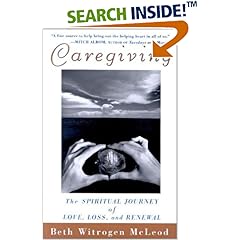
Book Review: Caregiving The Spiritual Journey of Love, Loss, and Renewal

Editorial Reviews
Book Description
Helping your family and loved ones when they need you most
"Caregiving has a big heart–on a much-needed topic. A rare book of spiritual and practical wisdom."–Sue Benderauthor of Plain and Simple and Everyday Sacred
"A poignant, wise, and in-the-trenches view of caregiving that is both practical and spiritual, especially of value to midlife adults."–Jean Shinoda Bolen, M.D., author of Goddesses in Everywoman and Close to the Bone
"Lovely. . . . Beth McLeod’s experience and wisdom shine through as she shares her heartfelt journey of loss, surrender, hope, and healing."–David Simon, M.D. medical director, the Chopra Center for Well Being, author of Vital Energy and Return to Wholeness
Sooner or later it will touch us all: A family member or loved one becomes ill or disabled, and we step in to help. This is caregiving, and in this powerful, unique book, prizewinning writer and advocate Beth Witrogen McLeod leads us through the caregiving journey with unflinching authority and compassion. Framed by the author's personal odyssey as a caregiver and richly informed by the inspiring and poignant tales of others, Caregiving explores medical and financial problems, all aspects of spirituality, and such issues as depression, stress, housing, home care, and end-of-life concerns. A rare blend of powerful storytelling and practical information, Caregiving is a revelation.
From the Inside Flap
"By my old professor’s side, I learned the precious value of caregiving. I am grateful that Beth McLeod has put together a fine source to help bring out the helping heart in all of us." —Mitch Albom author of Tuesdays with Morrie Sooner or later it will touch us all: A family member or loved one becomes ill or disabled, and we step in to help. This is caregiving, and in this powerful, unique book, prizewinning writer and advocate Beth Witrogen McLeod leads us through the caregiving journey with unflinching authority and compassion. Whether it involves caring for an aging parent, an ill spouse or partner, or a disabled child, caregiving takes us into a new reality quite unlike that of our usual workaday life. Too often, we don’t know where to find help or what questions to ask, and the health care system seems to get more complex every day. An indispensable guide for anyone who is or has been a caregiver or who anticipates becoming one, Caregiving includes advice from leaders in the fields of aging, medicine, finance, and spirituality. It explores medical and financial problems as well as such issues as depression, stress, housing, home care, and end-of-life concerns. The author also includes dozens of helpful resources at the back of the book. Framed by the author’s personal odyssey as a caregiver, Caregiving is richly informed by the inspiring and poignant tales of other caregivers. Caregiving shows that while at first we experience the dark night of the soul, through service to others we can discover our true nature and develop loving kindness and compassion; through caregiving we can see the renewal of both self and community. Personal transformation has been witnessed in sacred traditions throughout human history, and in Caregiving Beth McLeod draws on the wisdom of Buddhism, Judaism, Christianity, Islam, and shamanism, and on the writings of current and past spiritual figures, to illuminate the way. A rare blend of powerful storytelling and practical information, Caregiving is a revelation. --This text refers to the Hardcover edition.
Customer Reviews
Superevie
Beth Witrogen McLeod's book Caregiving The Spiritual Journey of Love, Loss, and Renewal is a must read for any person taking care of an ill loved one, whether they are a child, spouse and/or aging parent. My interview with Beth revealed a strong woman with a fierce determination to help other caregivers make the most of a very painful situation. Beth includes her own personal journey along with the stories of hundreds of people she has met online in her chat groups or in person during her many public appearances in her incredible book. As the creator and editor of HotFlash! a woman's online perimenopause/menopause magazine and online support group, I have found women in the same place as Beth. She has described so well in her book the guilt, the pain, the sorrow and yes, at times, the joy of taking care of a sick loved one. In attempting to find hope and love in a truly difficult situation, Beth guides us to make good decisions not only for the person needing care but for the person herself. She pulls back the curtain on this often overlooked yet important topic.
This is a must read for anyone taking care of a loved one and for the rest of us who will one day be in these extraordinary shoes.
CAschles
Caregiving is a special gift, written from the heart. I haven't been able to keep a copy. As soon as I get a new one, I give it away. The saying goes that one can't judge a book by its cover, but Caregiving's cover picture reveals the depths to which one goes, as page by page Beth shares her own and others experiences with caregiving, death, and the growth that can come from such profound moments. As a licensed clinical social worker and as someone who has experienced the death of both parents, I say brava! A wonderful weaving of poetic wisdom and practical suggestions.
More Books on Caregiving
Quick Tips for Caregivers

And Thou Shalt Honor: The Caregiver's Companion

Self-Care for Caregivers: A Twelve Step Approach

American Medical Association Guide to Home Caregiving

Caring, day by day
Program filling needs for seniors, caregivers Her dad needed a day to dress up and socialize. Her mom, meanwhile, just needed a break. So Karen Hutson, a referral specialist for Fairview Commons, started taking her 78-year-old dad to work one day a week.
|
Caring for your Parents on PBS
The first 90-minutes of Caring for Your Parents underscores today's struggle to keep parents at home
Caring for Your Parents is a Kirk Documentary Group, Ltd. Production for WGBH Boston. (check local listings) Producer's Interview
|


Saturday, March 29, 2008
New Alzheimer's Disease Survey Reveals Children of Sandwich Caregivers Assist With Loved Ones' Care
Three In Five Caregivers Say Their Children Help Care For Loved Ones With Alzheimer's Disease Results from the third annual Alzheimer’s Foundation of America (AFA) ICAN: Investigating Caregivers’ Attitudes and Needs Survey suggest that Alzheimer’s disease care is a family affair. Most “sandwich caregivers” – the parents or guardians of children under 21 who also care for an aging parent, other relative or friend with Alzheimer’s disease – say their children are assisting with caregiving responsibilities that range from attending doctors’ appointments to feeding and dressing their loved ones.
|

PARADE Magazine Features Smart Genetics and Alzheimer's Mirror
Smart Genetics has announced that PARADE magazine is featuring Alzheimer's Mirror as part of a nationwide poll asking readers if they want to learn their risk level for developing Alzheimer's disease. To vote, visit: http://www.parade.com/articles/editions/2008/edition_03-30-2008/Intelligence_Report#health.
|

Teva can't yet sell Alzheimer's generic (Aricept)
My mother takes Aricept at a cost of about $160 a month. A generic versions of Aricept is sure to benefit millions and dramatically cut the cost of health care.
We use to pay over $100 a month for Zocor. The generic now runs $10 a month (since July 2007).
We use to pay over $100 a month for Zocor. The generic now runs $10 a month (since July 2007).
Drug developer Teva Pharmaceutical Industries Ltd. said Friday a U.S. District Court ordered Teva to tentatively refrain from selling a generic version of Eisai Co.'s Alzheimer's treatment Aricept. The tentative injunction by the U.S. District Court for the District of New Jersey was requested by Japan's Eisai as part of an ongoing lawsuit with Teva. Teva has already gained tentative Food and and Drug Administration approval for the generic drug and could receive final approval April 26, when the mandatory stay of approval under the patent lawsuit expires. A trial date has not yet been set.
|
Free Online Publications Alzheimer's and Caregiving
Online Version Only
Online Version Only
Online Version Only
|
National Institute on Aging Clinical Trials
Search for Trials Trials in the News More Information:
|
Alzheimer's: How to help the caregivers
Often visits are even better Sometimes a caregiver just needs a little contact with the outside world.
|
Friday, March 28, 2008
Runaway health care costs — we’re #1!
Everybody knows that the US spends much more on health care than anyone else What I didn’t realize was just how clearly the evidence shows that the rising trend is steepest in the US. We have the biggest increase as well as the highest level. We’re #1!
|

Thursday, March 27, 2008
Skipping Cereal and Eggs, and Packing on Pounds
Researchers have found evidence that Mom was right: breakfast may really be the most important meal of all. A new study reports that the more often adolescents eat breakfast, the less likely they are to be overweight. The researchers examined the eating and exercise habits of 1,007 boys and 1,215 girls, with an average age of 15 at the start of the five-year study — a racially and economically diverse sample from public schools in the Minneapolis-St. Paul area. The authors found a direct relationship between eating breakfast and body mass index; the more often an adolescent had breakfast, the lower the B.M.I. And whether they looked at the data at a given point or analyzed changes over time, that relationship persisted.
|
Wednesday, March 26, 2008
Big belly in middle age triples risk of dementia
My mother has visceral fat. At her age it could be life threatening. There is no doubt this is a contributing factor to her Alzheimer's Having a large belly in middle age nearly triples the risk of developing dementia Researchers measured the abdominal fat of 6,583 people age 40 to 45 in northern California and some 36 years later 16 percent had developed dementia Those who were overweight or obese but did not have a pot belly had an 80 percent increase in the risk of dementia compared to people with a normal body weight and abdominal fat level The risk increase jumped to 230 percent among overweight people with a large belly and 360 percent among the obese with large abdomens. "Where one carries the weight -- especially in midlife -- appears to be an important predictor for dementia risk," Whitmer said. "These findings imply that the dangerous effects of abdominal obesity on the brain may start long before the signs of dementia appear."
|

Eight Types of Dementia Defined

I frequently get asked questions about dementia and its various types. You can learn more about eight types of dementia on the following page.
Source 2008 Alzheimer’s Disease Facts and Figures
Alzheimer’s disease is the most common cause of dementia. This section provides information about the definition of dementia, the characteristics of specific types of dementia and the symptoms, risk factors for and treatment of Alzheimer’s disease. More detailed information on these topics is available at www.alz.org.
Dementia: Definition and Specific Types Dementia is a clinical syndrome of loss or decline in memory and other cognitive abilities. It is caused by various diseases and conditions that result in damaged brain cells. To be classified as dementia, the syndrome must meet the following criteria:
• It must include decline in memory and in at least one of the following cognitive abilities:
1. Ability to generate coherent speech and understand spoken or written language;
2. Ability to recognize or identify objects, assuming intact sensory function;
3. Ability to execute motor activities, assuming intact motor abilities, sensory function and comprehension
of the required task; and
4. Ability to think abstractly, make sound judgments and plan and carry out complex tasks.
• The decline in cognitive abilities must be severe enough to interfere with daily life.
Diff erent types of dementia have been associated with distinct symptom patterns and distinguishing microscopic brain abnormalities. Increasing evidence from long-term epidemiological observation and autopsy studies suggests that many people have microscopic brain abnormalities associated with more than one type of dementia. The symptoms of diff erent types of dementia also overlap and can be further complicated by coexisting medical
conditions.
Table 1 provides information about the most common types of dementia.
Table 1: Common Types of Dementia and Their Typical Characteristics
Type of Dementia Characteristics
Alzheimer’s disease. Most common type of dementia; accounts for 60 to 80 percent of cases.
Difficulty remembering names and recent events is often an early clinical
symptom; later symptoms include impaired judgment, disorientation, confusion,
behavior changes and trouble speaking, swallowing and walking.
Hallmark abnormalities are deposits of the protein fragment beta-amyloid
(plaques) and twisted strands of the protein tau (tangles).
Vascular dementia. Considered the second-most-common type of dementia.
Impairment is caused by decreased blood fl ow to parts of the brain, often due
to a series of small strokes that block arteries.
Symptoms often overlap with those of Alzheimer’s, although memory may not
be as seriously aff ected.
Mixed dementia. Characterized by the presence of the hallmark abnormalities of Alzheimer’s
and another type of dementia, most commonly vascular dementia, but also
other types, such as dementia with Lewy bodies, frontotemporal dementia and
normal pressure hydrocephalus.
Dementia with Lewy bodies. Pattern of decline may be similar to Alzheimer’s, including problems with memory, judgment and behavior changes.
Alertness and severity of cognitive symptoms may fl uctuate daily.
Visual hallucinations, muscle rigidity and tremors are common.
Hallmarks include Lewy bodies (abnormal deposits of the protein alphasynuclein)
that form inside nerve cells in the brain.
Parkinson’s disease. Many people who have Parkinson’s disease develop dementia in the later stages of the disease.
The hallmark abnormality is Lewy bodies (abnormal deposits of the protein
alpha-synuclein) that form inside nerve cells in the brain.
Frontotemporal dementia. Involves damage to brain cells, especially in the front and side regions
of the brain.
Typical symptoms include changes in personality and behavior and diffi culty
with language.
No distinguishing microscopic abnormality is linked to all cases.
Pick’s disease, characterized by “Pick’s bodies,” is one type of frontotemporal
dementia.
Creutzfeldt-Jakob disease. Rapidly fatal disorder that impairs memory and coordination and causes behavior changes.
“Variant Creutzfeldt-Jakob disease” is believed to be caused by consumption of
products from cattle affected by “mad cow disease.”
Caused by the misfolding of prion protein throughout the brain.
Normal pressure hydrocephalus. Caused by the buildup of fl uid in the brain.
Symptoms include difficulty walking, memory loss and inability to control urine.
Can sometimes be corrected with surgical installation of a shunt in the brain to
drain excess fluid.
Mild cognitive impairment is a condition in which a person has problems with memory, language or another
essential cognitive function that are severe enough to be noticeable to others and show up on tests, but not severe enough to interfere with daily life. Some people with mild cognitive impairment go on to develop dementia. For others, the symptoms of mild cognitive impairment do not progress to dementia, and some people who have mild cognitive impairment at one point in time later revert to normal cognitive status.
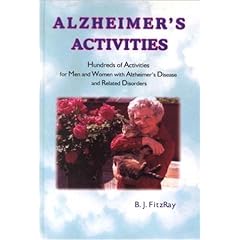

Free CareGiver's Guide
The CareGiver's Guide.
You can receive the guide immediately via download. If you prefer it is also available via email or mail.
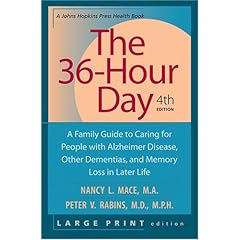
The 36-Hour Day: A Family Guide to Caring for People with Alzheimer Disease and Memory Loss in Later Life
You can receive the guide immediately via download. If you prefer it is also available via email or mail.
The 36-Hour Day: A Family Guide to Caring for People with Alzheimer Disease and Memory Loss in Later Life
Sunday, March 23, 2008
When your parent needs help fast
1. To find a caregiver in your area, visit these sites. Eldercarelink. Home Health Compare
Caring from a Distance Providing Care at Home 3. A geriatric care manager may help. The National Association of Geriatric Care Managers can help you find a professional in your desired location. 4. Find home health care experts where you live. The National Family Caregivers Association lists experts in your area who specialize in family caregiving issues. 5. Set up a Web site for your family. Care Central allows you to set up a communications Web site so everyone knows what's going on. Many more sites offer general information about finding a home caregiver. The U.S. Department of Health and Human Services' ElderCare site has information on everything from health insurance counseling to prescription assistance. This site has good general information.
|
Saturday, March 22, 2008
CaregiverTips

More than 27 million family caregivers in the United States provide more than 20 hours of care each week.
Taking care of yourself while caregiving
When you are a caregiver, finding time for positive, nurturing interactions with others might seem impossible. But you owe it to yourself to find time for you. Without it, you may not have the mental strength to deal with all of the emotions you experience as a caregiver, including guilt and anger. Give yourself permission not to be perfect…you're doing the best you can.
* Incorporate activities that give you pleasure even when you don't really feel like it. Listen to music, work in the garden, engage in a hobby…whatever it is that you enjoy.
* Pamper yourself. Take a warm bath and light candles. Find some time for a manicure or a massage.
* Eat balanced meals to nurture your body. Find time to exercise even if it's a short walk everyday. Do the best you can to sleep at least 7 hours a night.
* "Laughter is the best medicine"…buy a light-hearted book or rent a comedy video. Whenever you can, try to find some humor in everyday situations.
* Keep a journal. Write down your thoughts and feelings. This helps provide perspective on your situation and serves as an important release for your emotions.
* Arrange a telephone contact with a family member, a friend, or a volunteer from a church or senior center so that someone calls each day to be sure everything is all right. This person could relieve you of responsibility by contacting other family members to let them know the status of the care receiver or if you need anything.
* Try to set a time for afternoons or evenings out. Seek out friends and family to help you so that you can have some time away from the home. And, if it is difficult to leave, invite friends and family over to visit with you. Share some tea or coffee. It is important that you interact with others.
* Join a support group. Seek out people who are going through the same experiences that you are living each day. If you can't leave the house, many Internet services are available.
* Draw strength from your faith, or any faith-based caregiving support services. A congregation in a church or synagogue can provide the encouragement you need to feel good about your caregiving role, and may also be able to provide a break from time to time.
Finding community support
* Many organizations assist caregivers through support groups, home visitors, respite care, transportation, and other services. Call your local Area Agency on Aging, senior center, senior services organization, county information and referral service, university gerontology department, family service, or hospital social work unit for contact suggestions.
* If your care recipient is a Veteran, home health care coverage, financial support, nursing home care, and adult day care benefits may be available. Some Veterans Administration programs are free, while others require co-payments, depending upon the veteran’s status, income, and other criteria.
* Fraternal organizations such as the Elks, Eagles, or Moose lodges may offer some assistance if your care recipient is a longtime dues-paying member. This help may take the form of phone check-ins, home visits, or transportation.
* Many community transportation services are free for your care recipient, while others may have a nominal fee or ask for a donation. Your local Area Agency on Aging (AAA) can help you locate transportation to and from adult day care, senior centers, shopping malls, and doctor's appointments.
* Telephone reassurance provides prescheduled calls to homebound older adults to reduce their isolation and monitor their well-being. Check with your local AAA, religious groups, senior centers, and other public or nonprofit organizations.
* If your loved one is well enough, consider the possibility of adult day care. An adult day care center can provide you with needed breaks during the day or week, and your loved one with some valuable diversions and activities. (See Helpguide’s Adult Day Care Centers: A Guide to Options and Selecting the Best Center for Your Needs for more information.)
Helpful tips to make caregiving easier
* For an older person who cannot get in and out of the tub alone and who does not feel safe in the shower, install grab bars next to toilets, bathtubs, and showers. This is very important to prevent falls.
* Also, get a stool for the tub or shower or, at least, put a sturdy lawn chair right in the tub on a nonslip rubber mat. Help the person to step carefully into the tub, to sit on the chair, to shower, then to stand up and step out. A hand-held shower attachment is also very helpful.
* Use a draw sheet (half sheet) to help move the person in bed.
* Replace buttons, zippers, and snaps with Velcro® fasteners (available at local yardage or craft stores). All types of clothing, including shoes, are now being made with Velcro® fasteners.
* Use a hand towel (which is larger than a washcloth) for sponge-bathing a bedridden person.
* Add foam padding to increase the size of handles on toothbrushes, razors, combs, and utensils. Foam curlers also work well.
* Obtain an identification bracelet for the older adult you care for, containing name, address, and telephone number. If the person wanders or gets lost, an ID bracelet will ensure that they can be identified. If there is a special medical problem, get a Medic Alert Emblem (necklace or bracelet) engraved with the recipient's condition.
* Make a list of contents of cupboards and drawers used by the care recipient. Use large print, and tape the lists to the drawers and cupboards.
* Use a Chinese soup spoon to avoid spilling food if the care recipient's hand shakes.
* Older people can learn new skills if they see the value of what they are expected to learn. Take time to explain how, what, and why.
* Make audiotapes or CDs of your loved one's favorite music so that you or they can play it easily. Listening to music can lift the spirits and take the mind off pain.
Medication and health care tips
* Talk to a pharmacist about the best way to organize medications, and be sure that you purchase something specifically for the purpose of managing medications.
* Find ways to make your care recipient laugh. Laughter has many proven health benefits. Laughter helps to relax muscles and relieve pain, and boosts the immune system.
* Keep oranges and orange juice in the house. Recent research has confirmed the importance of vitamin C and other antioxidants in reducing the risk of osteoarthritis as well as slowing progression of the disease.
* Nonfat dry milk is a good protein supplement in soups, milk shakes, and casserole dishes, or mixed with water for reconstituted milk.
* Make sure your care recipient wears sunscreen as well as a hat and protective clothing when going out, whether the sun is shining or not. Some medications increase the likelihood of skin damage from the sun's ultraviolet rays.
* Ask your care recipient's physician or physical therapist to recommend a stretching routine. Stretching promotes flexibility in joints and muscles, which helps preserve range of motion.
* If reasonable, suggest a swimming class for your care recipient. Exercising in water effectively works the joints with minimal impact.
How can a caregiver support group help me?
Remember that old adage, "trouble shared is trouble halved"? A support group is one way to share your troubles. In most support groups, you'll talk about your problems and listen to others talk; you'll not only get help, but you'll be able to help others, too. Most important, you'll find out that you're not alone.
http://www.helpguide.org/elder/caring_for_caregivers.htm
The 36-Hour Day: A Family Guide to Caring for People with Alzheimer Disease and Memory Loss in Later Life
Dementia Factsheet (Alzheimer's Disease)

I ran across this factsheet from the Milton S Hershey Medical Center. The section entitled,What are the Symptoms, is particularly interesting.
Source Milton S Hershey Medical Center
Dementia
What is it?
Dementia is the gradual deterioration of mental functioning, such as concentration, memory, and judgment, which affects a person’s ability to perform normal daily activities.
Who gets it?
Dementia occurs primarily in people who are over the age of 65, or in those with an injury or disease that affects brain function. While dementia is most commonly seen in the elderly, it is not a normal consequence of the aging process.
What causes it?
Dementia is caused by the death of brain cells. Brain cells can be destroyed by brain diseases, such as Alzheimer’s disease, or strokes (called vascular or multi-infarct dementia), which decrease blood flow to the brain. Lewy body dementia is another common cause attributed to changes in brain tissue. Other causes can include AIDS, high fever, dehydration, hydrocephalus, systemic lupus erythematosus, Lyme disease, long-term drug or alcohol abuse, vitamin deficiencies/poor nutrition, hypothyroidism or hypercalcemia, multiple sclerosis, brain tumor, or diseases such as Pick’s, Parkinson's, Creutzfeldt-Jakob, or Huntington's. Dementia can also result from a head injury that causes hemorrhaging in the brain or a reaction to a medication.
What are the symptoms?
In most cases, the symptoms of dementia occur gradually, over a period of years. Symptoms of dementia caused by injury or stroke occur more abruptly. Difficulties often begin with memory, progressing from simple forgetfulness to the inability to remember directions, recent events, and familiar faces and names. Other symptoms include difficulty with spoken communication, personality changes, problems with abstract thinking, poor personal hygiene, trouble sleeping, and poor judgment and decision making. Dementia is extremely frustrating for the patient, especially in the early stages when he or she is aware of the deficiencies it causes. People with dementia are likely to lash out at those around them, either out of frustration or because their difficulty with understanding makes them misinterpret the actions of others. They become extremely confused and anxious when in unfamiliar surroundings or with any change in routine. They may begin a task, such as cooking, then wander away aimlessly and completely forget what they had been doing. Dementia is often accompanied by depression and delirium, which is characterized by an inability to pay attention, fluctuating consciousness, hallucinations, paranoia, and delusions. People in advanced stages of dementia lose all control of bodily functions and are completely dependent upon others.
How is it diagnosed?
Dementia is diagnosed through a study of the patient’s medical history and a complete physical and neurological exam. The doctor will speak with those close to the patient to document a pattern of behavior. He or she will also evaluate the patient’s mental functioning with tests of mental status, such as those that require the patient to recall words, lists of objects, names of objects, and recent events. Diagnostic tests, such as blood tests, x-rays, or magnetic resonance imaging (MRI), positron emission tomography (PET), or computed tomography (CT) scans, can help determine the cause of the dementia.
What is the treatment?
In some instances, treating the cause of dementia may successfully reverse some or all of the symptoms. This is the case when the cause is related to a vitamin/nutritional deficiency, tumor, alcohol or drug abuse, reaction to a medication, or hormonal disorder. When dementia is related to an irreversible destruction of brain tissue, such as with Alzheimer’s disease, Lewy body dementia, or multiple strokes, treatment involves improving the patient’s quality of life as much as possible. This includes maintaining a stable, safe, supportive environment and providing constant supervision. While this may be done in the home, people in the advanced stages of dementia may require round-the-clock care in a long-term healthcare facility. It is important to provide the patient with structured activities and avoid disruptions to his or her daily routine. Many patients enjoy therapeutic activities, such as crafts or games, designed specifically for people with dementia. Some medications, such as donepezil and tacrine, have been effective in improving the mental functions of those in the beginning stages of dementia. Patients with hallucinations and delusions may also be treated with antipsychotic drugs, while antidepressant medications are used to treat depression.
Self-care tips
There is currently no known way to prevent dementia associated with Alzheimer's disease. You can decrease your risk of dementia associated with stroke by maintaining a healthy lifestyle, following a heart-healthy diet, and controlling high blood pressure and high cholesterol. Healthy lifestyles, including not smoking and not abusing drugs and alcohol, go a long way in keeping most people in good health. Caring for a person with dementia is stressful. It is important to learn all you can about the disease, seek the help of support groups, and find a responsible caregiver who can give you a break when needed. There are daycare programs specifically designed for patients with dementia that are good for the patient and the family.
--------------------------------------------------------------------------------
This information has been designed as a comprehensive and quick reference guide written by our health care reviewers. The health information written by our authors is intended to be a supplement to the care provided by your physician. It is not intended nor implied to be a substitute for professional medical advice.
The 36-Hour Day: A Family Guide to Caring for People with Alzheimer Disease and Memory Loss in Later Life
Subscribe to:
Posts (Atom)