Thursday, November 29, 2007

What Does Blood Pressure Have to Do With Alzheimer’s?

This is one study I would really like to get my mother into. She takes three medications now for high blood pressure and it is still out of control. In addition, I discovered after the fact that she was not taking her blood pressure medication as prescribed for years before she was diagnosed with Alzheimer's dementia.

The brain needs lots of blood to work well. That’s made doctors wonder whether high blood pressure, which can reduce blood flow to the brain, is connected to cognitive problems — especially in the elderly, in whom both high blood pressure and mental decline are common. (See, for example, this recent study.)

A small study being presented today at the RSNA conference is the latest finding to suggest there may be a connection. Using a type of MRI that measures blood flow, researchers examined how high blood pressure affected blood flow in the brains of people with and without Alzheimer’s disease (abstract here).

They found that those with high blood pressure had lower levels of blood flow overall, and those with high blood pressure and Alzheimer’s had lower blood flow than those with high blood pressure but not Alzheimer’s.

In an interview with the Health Blog, the lead author, Cyrus Raji, noted that the findings, based on only 88 people, need to be validated by a larger trial. But he said the research presents an interesting possibility that could give doctors and patients yet another reason to try to control high blood pressure.

“We are not saying that hypertension causes Alzheimer’s,” said Raji, a grad student at the University of Pittsburgh. “It’s an extra hit to the brain, and an extra hit in areas that can eventually be affected by Alzheimer’s disease … If that turns out to be the case, which we won’t know until we do a lot more work, that would be a huge impetus for tighter control for hypertension, especially in the elderly.”

Trackback URL: http://blogs.wsj.com/health/2007/11/28/what-does-blood-pressure-have-to-do-with-alzheimers/trackbac


alzheimer's, blood flow, brain, cognitive problems, high blood pressure, hypertension

Nursing Homes: The Worst of the Worst

clipped from blogs.wsj.com
The Centers for Medicare and Medicaid Services today released their first-ever list of the nation’s poorest-performing nursing homes, designated as “Specialty Focus Facilities.” As of October, there were 128 designated SFFs out of 16,000 active nursing homes in the country; the 54 worst appear in today’s list, according to a CMS press release.
Most nursing homes have some deficiencies, but the ones on this list have about twice as many as a typical facility, their deficiences are more serious, and they either consistently failed to address the shortcomings
if you’re searching for a nursing home, CMS has tips for how to look for a good one. Most importantly, CMS urges, visit the facilities and talk to staff and residents.
clipped from www.cms.hhs.gov
Use the Nursing Home Brochure http://www.medicare.gov/Publications/Pubs/pdf/nursinghome.pdf and �Guide to Choosing a Nursing Home� http://www.medicare.gov/Publications/Pubs/pdf/02174.pdf - both publications are available on Nursing Home Compare.
 blog it

Wednesday, November 28, 2007

Researchers deem Alzheimer's a Type 3 diabetes

My grandmother was diabetic, my sister is diabetic and my mother suffers from Alzheimer's.

Sometimes it's better if great minds don't think alike. Neurobiologists with decidedly different interests recently collaborated at Northwestern University and came up with new evidence about Alzheimer's disease, a form of dementia that affects about 5 million Americans. They now consider it a Type 3 diabetes.
This team studied healthy nerve cells from the brain's hippocampus region, growing in culture dishes, and they observed abundant insulin receptors. "If you look closely at a high-resolution [image], you'll see that they are at synapses," Klein said. "Before we added the ADDLs [toxins], they all had insulin receptors." But with the toxin added to the culture dishes, "the insulin receptors disappeared from their surfaces."
"[Klein's work] is like finding the missing piece of a jigsaw puzzle,"
"[Researchers] are looking at drugs that are given to Type 2 diabetics that increase the ability of cells to respond to insulin. It makes the insulin receptors more abundant or more lively."
 blog it

Tuesday, November 27, 2007

With Alzheimer's, the Caregiver Is a Patient, Too

This is an interesting and thought provoking article.

"What we're seeing is that Alzheimer's is not a typical disease model," she says, "precisely because the health and well-being of the caretaker is affected as well as the patient. I know when I assume the care of an Alzheimer's patient, I am also caring for the caregiver."


With Alzheimer's, the Caregiver Is a Patient, Too

Alzheimer's Disease and other forms of dementia do not affect just the patient. These diseases gradually rob patients of memory and other intellectual abilities, leaving them unable to perform routine tasks. As the disease continues to destroy brain cells, patients increasingly depend on family members or others to carry out simple tasks like shopping and getting dressed. Ultimately, most patients will need complete care, adding to the caregivers burden.

Alzheimer's disease is the most common form of dementia, affecting up to 4 million Americans - and untold millions of family members and others who care for them. Physicians now recognize that Alzheimer's caregivers themselves often require care and attention, says Diana R. Kerwin, MD, Medical College of Wisconsin Assistant Professor of Medicine in the Division of Geriatrics and Gerontology.

"What we're seeing is that Alzheimer's is not a typical disease model," she says, "precisely because the health and well-being of the caretaker is affected as well as the patient. I know when I assume the care of an Alzheimer's patient, I am also caring for the caregiver."

Caregivers who accompany patients to the Froedtert Senior Health Program's Geriatric Evaluation Clinic, where Dr. Kerwin practices, are screened for "caregiver stress" and see a gerontologic nurse and social worker who will answer their questions, provide information and help create a plan for care of the patient. Caregivers are given a kit with information about support groups and community services, including adult day care, home care agencies, assisted living, skilled nursing facilities and respite care.

Stress, Depression Are Common
According to the Alzheimer's Association, more than 80% of Alzheimer caregivers report that they frequently experience high levels of stress, and nearly half say they suffer from depression. It's not difficult to see why.

The national Family Caregiver Alliance terms caregiver depression "one of today's all-too-silent health crises." The alliance estimates that caregiving spouses between the ages of 66 and 96 who are experiencing mental or emotional strain have a 63% higher risk of dying than people the same age who are not caregivers.

"Alzheimer's causes progressive memory loss, and in the later stages patients can develop behavior problems," Dr. Kerwin says. "It's distressing for the caregiver to suddenly have to cope with their loved one's anger, hallucinations, paranoia, aggression or inappropriate conduct in public. It's upsetting when, as the disease progresses, the patient no longer recognizes the spouse or loved one."

Caregivers often experience feelings of guilt, believing they are not doing enough to help, she adds. Spouses and adult children feel grief and loss, not unlike a death in the family - except that instead of being sudden, it's spread out over years. Alzheimer's is a progressively worsening disease, but the rate of progression from mild to advanced can vary widely, from three to 20 years. As Alzheimer's progresses, the loss of brain function itself will cause death unless the patient has one or more other serious illness.

When the Child Becomes the Parent
For an adult child who cares for a parent with dementia, taking on the role of caregiver is a role reversal and takes some adjustment. "It can be a difficult transition for a child to take on the role of 'parent' and decision-maker," Dr. Kerwin says. "The child often needs to be empowered to step in and begin caring for their ailing parent - making sure their parent takes his or her medication, for instance, or telling their parent they should not drive, and making difficult decisions about when the parent is no longer able to safely live alone."

Those caregivers are often already juggling multiple responsibilities with their own spouses, children and careers. In some cases, adult-child caregivers with siblings feel resentful if they must bear the brunt of their parent's care, Dr. Kerwin says. If the adult-child caregiver is the only sibling living in the same city as the parent he or she often feels isolated, overwhelmed and underappreciated.

And sometimes, whether the caregiver is a spouse or an adult sibling, out-of-town siblings or other family members who see the parent infrequently may think the caregiver is exaggerating the extent of the Alzheimer's patient's decline. The out-of-town family members may feel guilty about not being able to help from a distance, and when they do visit, they may criticize or ask to change the care their parent is receiving.

Caregivers are often fatigued from carrying out their new responsibilities, Dr. Kerwin says. "I see them neglecting their own health. It's not unusual for caregivers to suffer not only depression but also higher levels of hypertension. We recommend they have annual physicals, during which they should be sure to tell their primary care physician that they are caregivers. We also recommend they participate in support groups and learn about the community resources available."

Other concerns caregivers regularly express are loss of concentration due to their caregiving responsibilities and fear that they themselves might eventually get the disease.

Warning Signs for Caregivers What are some warning signs of caregiver stress? According to the Alzheimer's Association, they include:

Anger
Anxiety
Denial
Depression
Exhaustion
Health problems
Irritability
Lack of concentration
Sleeplessness
Social withdrawal
Caregivers who regularly experience these conditions should seek help from their physician, says the Alzheimer's Association.

Financial Strain Heightens Burden
In some families, the presence of Alzheimer's disease also brings financial problems that can add to stress and depression. Caregivers sometimes give up paying jobs for the unpaid one of caring for a loved one. They often find additional responsibilities are thrust on them, such as overseeing medications for their patient, knowing if or when the patient's care should be transferred to a nursing home, and taking on power of attorney duties along with living wills and advanced directives that specify whether terminal patients should undergo extreme measures to keep them alive.

The national Family Caregiver Alliance estimates that approximately 80% of the long-term care in the United States is provided without compensation, sometimes around the clock.

"The responsibilities are vast," Dr. Kerwin notes. "It's important for caregivers to regularly take some time for themselves, away from their caring responsibilities."

Barbara Abel
HealthLink Contributing Writer

The Medical College's Center for Healthy Communities, along with the local non-profit organization Community Care for the Elderly Partnership, has developed a Caring for Caregivers Program to support Medicaid- and Medicare-eligible residents in the community who care for frail relatives, often those with dementia. For more information, contact Tovah H. Bates, PhD, Assistant Professor, Family & Community Medicine, at 414-456-4305, or Community Care for the Elderly at 414-385-6600.

For more information on this topic, see the HealthLink articles End-Stage Alzheimer's - the Long Goodbye and Current Research on Alzheimer's, Memory Loss, and Aging.


All American Senior Care
AllAmerican Senior Care Weblog


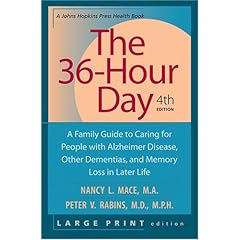
The 36-Hour Day: A Family Guide to Caring for People with Alzheimer Disease and Memory Loss in Later Life


Monday, November 26, 2007

Dementia often first noticed at holidays

It was at large gatherings that the Holladay family first noticed their mother was suffering from dementia. She couldn't find the bathroom in a family member's home.
She sat at the edges of a party, too confused to interact with the family.
A diagnosis of Alzheimer's followed for the now 75-year-old woman.
The signs of early dementia may be disguised during the year, when sufferers can rely on habit. But mess with the routine - as the holidays do - and the signals become obvious, Foster said.
Other real-life examples of dementia surfacing around the holidays: A patient who forgot to buy presents for all of her grandchildren.
Another who bought every grandchild, boys and girls, the same gift. A father who flew to meet his son for Christmas and didn't recognize him at the airport.
Stick with the familiar. Maintain routines and skip strange and noisy restaurants.
* Keep it small. Large family get togethers "become too disruptive," Genebach said.
 blog it

Wednesday, November 21, 2007

Keeping seniors healthy, Medicare solvent

clipped from blogs.usatoday.com
A new partnership between a company that provides housing to seniors and a private health insurer is helping to cut Medicare costs, The Dallas Morning News reported. The pilot program offers supplemental private insurance to residents of Erickson Retirement Communities, which owns 18 facilities nationwide, the newspaper said.
The premiums are used to pay for on-site physicians and nurses. Because physicians work where residents live, it's easier for residents to visit them and for staff to alert doctors of potential problems. By keeping closer tabs on patients and catching problems early, the number of costly hospital stays paid for by Medicare is reduced.
Currently, 2,300 seniors are enrolled. "The only question is whether Erickson can continue that success as the number of enrollees grows," Jeffrey Kramer, director of the Center for Health Care and Insurance Studies at the University of Connecticut, told the newspaper.
 blog it

Romney: Cap Malpractice Awards, Create Health Courts

What say you?
clipped from blogs.wsj.com
Health policy keeps making headlines in the presidential race. This time it’s Mitt Romney, who argued yesterday for a cap on malpractice awards.
He also said he’d encourage states to create health courts with judges who specialize in hearing medical liability cases, an idea that’s been around for awhile but never really taken off.
As governor of Massachusetts, he created a health-care plan that requires everyone to buy insurance, and provides subsidies to help lower-income people do so. That’s been a model for national plans proposed by Hillary Clinton and John Edwards.
Romney has shied away from taking his Massachusetts plan nationwide
“I believe we have to enact federal caps on non-economic and punitive damages related to malpractice,” Romney said
“These lottery-sized awards and frivolous lawsuits may enrich the trial lawyers but they put a heavy burden on doctors, hospitals and, of course through defensive medicine, they put a burden on the entire health care system.”
 blog it

Tuesday, November 20, 2007

Official Black Friday 2007 Web Site

clipped from bfads.net
BestBuy has just released their list of Secret Black Friday Doorbuster Items that are good in-store only. Among the items are Toshiba Laptop w/ Canon Printer Package for $229 and a Sony Cybershot 7.2MP Digital Camera for $99.99. Once again, these are extra Black Friday deals that do not appear in the Best Buy Black Friday ad and are only available in-store.
It's been a long 20+ days, but we have just posted the 202-item Walmart Black Friday Sale Information and the 46-page Walmart Black Friday Advertisement Scan which is available on our advertisement scans page.
Currently, 30 of the Walmart Black Friday items are currently available online at Walmart.com for their Black Friday price.

blog it