 Looking back, there is little doubt in my mind that if I had had the proper education or information I would have realized my mother was suffering from dementia sooner. Most people like me tend to ignore the symptoms at first believing they are simply signs of "old age". Anyone who ends up in my shoes knows and understands that a person in the early stages of dementia or Alzheimer’s can function with some normality--even drive a car. It is not until they deteriorate or until some "event" takes place that we wake up to reality.
The basic underlying premise is that behavior changes slowly in the elderly and if they begin to suffer cognitive impairment it will be evidenced in behavioral changes. Sometimes these changes can be quite subtle but if detected could raise a “red flag”.
If my mother had been enrolled in any of these studies I feel certain she would have been diagnosed with dementia sooner. This would have allowed me to get her in an exercise program, get her proper nutrition, and insure that she was taking her medicines as prescribed. I learned in the last three years how important these three factors are in the quality of her life.
My mother turned 91 years old in June and she suffers from Alzheimer’s disease. I am her CarGiver.
The article on the next page is one of the best I have read.
Sensors could help catch first signs of dementia
Monitors and online tests track subtle changes in daily mobility, behavior
Source Associated Press and MSNBC
WASHINGTON - Tiny motion sensors are attached to the walls, doorways and even the refrigerator of Elaine Bloomquist’s home, tracking the seemingly healthy 86-year-old’s daily activity.
It’s like spying in the name of science — with her permission — to see if round-the-clock tracking of elderly people’s movements can provide early clues of impending Alzheimer’s disease.
“Now it takes years to determine if someone’s developing dementia,” laments Dr. Jeffrey Kaye of Oregon Health & Science University, which is placing the monitors in 300 homes of Portland-area octogenarians as part of a $7 million federally funded project.
The goal: Shave off that time by spotting subtle changes in mobility and behavior that Alzheimer’s specialists are convinced precede the disease’s telltale memory loss.
Simple early signs
Early predictors may be as simple as variations in speed while people walk their hallways, or getting slower at dressing or typing. Also under study are in-home interactive “kiosks” that administer monthly memory and cognition tests, computer keyboards bugged to track typing speed, and pill boxes that record when seniors forget to take their medicines.
 More than 5 million Americans, and 26 million people worldwide, have Alzheimer’s, and cases are projected to skyrocket as the population ages. Today’s medications only temporarily alleviate symptoms. Researchers are desperately hunting new ones that might at least slow the relentless brain decay if taken very early in the disease, before serious memory problems become obvious.
So dozens of early diagnosis methods also are under study, from tests of blood and spinal fluid to MRI scans of people’s brains. Even if some pan out, they’re expensive tests that would require lots of doctor intervention, when getting someone to visit a physician for suspicion of dementia is a huge hurdle. And during routine checkups, even doctors easily can miss the signs.
Bloomquist, of Milwaukie, Ore., knows the conundrum all too well. She volunteered for Kaye’s research because her husband died of Alzheimer’s, as did his parents and her own mother.
“It’s hard to know when people begin Alzheimer’s,” she reflects. “Alzheimer people do very well socially for short periods of time. If it’s just a casual conversation, they rise to the occasion.”
‘Typical’ days monitored
Measuring how people fare at home — on bad days as well as good ones, not just when they’re doing their best for the doctor — may spot changes that signal someone’s at high risk long before they’re actually demented, Kaye told the Alzheimer’s Association’s international dementia-prevention meeting last week.
“If you only assess them every once-in-a-blue-moon, you really are at a loss to know what they are like on a typical day,” Kaye explains.
High-tech monitors under study:
Researchers at New York’s Mount Sinai School of Medicine are heading a study that ultimately plans to recruit 600 people over age 75 to help test in-home “kiosks” that turn on automatically to administer monthly cognitive exams. A video of a smiling scientist appears on-screen to talk participants through such classic tests as reading a string of words and then, minutes later, repeating how many they recall, or seeing how quickly they complete connect-the-dot patterns.
An Oregon pilot study of the motion sensors tracked 14 participants in their upper 80s for almost a year. Half had “mild cognitive impairment,” an Alzheimer’s precursor, and half were healthy. Impaired participants showed much greater variation in such day-to-day activities as walking speed, especially in the afternoons.
Why? The theory is that as Alzheimer’s begins destroying brain cells, signals to nerves may become inconsistent — like static on a radio — well before memories become irretrievable. One day, signals to walk fire fine. The next, those signals are fuzzy and people hesitate, creating wildly varying activity patterns.
Study receives unique grant
The pilot study prompted a first-of-its-kind grant from the National Institutes of Health to extend the monitoring study to 300 homes; 112 are being monitored already, mostly in retirement communities like Bloomquist’s. They’re given weekly health questionnaires to make sure an injury or other illness that affects activity doesn’t skew the results.
In addition, participants receive computer training so they can play brain-targeted computer games and take online memory and cognition tests. The keyboards are rigged to let researchers track changes in typing speed and Internet use that could indicate confusion.
Finally, a souped-up pill dispenser called the MedTracker is added to some of the studies, wirelessly recording when drugs are forgotten or taken late.
Electronics giants already sell various medical warning technologies for the elderly, including dementia patients, such as pill boxes that sound reminder alarms at dose time. And the Alzheimer’s Association and Intel Corp. are jointly funding research into how to use television, cell phones and other everyday technology to do such things as guide dementia patients through daily activities.
The next step of companies selling early symptom monitoring isn’t far off, and unbiased data on what really helps will be crucial, Kaye warns.
 "The strength of this study is that it examines the issue with a huge amount of statistical power and uses existing data to look prospectively at Alzheimer’s and Parkinson’s," said lead author Benjamin Wolozin, MD, PhD, a professor of pharmacology at BUSM.
"The strength of reduction of incidence of dementia with simvastatin is striking,".
 Simvastatin
 zocor
zocor statins
 alzheimer's
 caregiving
Researchers from Boston University School of Medicine (BUSM) have found that the statin, simvastatin, reduces the incidence of Alzheimer’s disease and Parkinson’s disease by almost 50 percent. This is the first study to suggest that statins might reduce the incidence of Parkinson’s disease. These findings, will be published in the July online open access journal BioMed Central (BMC) Medicine.
Statins that stave off Alzheimer's
By Nicole Laskowski
Statins May Stave Off Alzheimer’s
What’s up:
If you’re taking a statin to reduce cholesterol, you may also be improving your chances of avoiding certain neurodegenerative diseases. New research from the School of Medicine indicates that simvastatin, a statin sold as Zocor, reduces the incidence of Alzheimer’s disease and Parkinson’s disease by almost 50 percent.
The researchers, led by Benjamin Wolozin, a MED professor of pharmacology, screened the Decision Support System database of the United States Veterans Affairs Medical System, looking for the effects of three statins — simvastatin, lovastatin, and atorvastatin — on the expected incidence of Alzheimer’s disease and Parkinson’s disease. His study of more than 700,000 subjects taking simvastatin showed that the drug reduced the incidence of both Alzheimer’s disease and Parkinson’s disease by almost 50 percent. A study of people taking atorvastatin showed that the drug reduced the incidence of Alzheimer’s disease by almost 10 percent. Lovastatin was not shown to reduce the incidence of either disease.
Wolozin is unsure why simvastatin reduces the incidence of these diseases, but he suspects that because the statin blocks a cholesterol-producing enzyme called HMG-CoA reductase, it may also affect the production of other chemicals. He notes that simvastatin reduces inflammation, and that it increases the production of some growth factors in the brain, which may make neurons more capable of resisting chronic degenerative disease.
What it means to you:
“If you are someone who is at risk for Alzheimer’s or Parkinson’s disease, you should use simvastatin because it could slow the process,” said Wolozin. “Most people currently use atorvastatin, because it is effective at reducing vascular injury related to cardiovascular disease. If your major health risk is cardiovascular disease, you might want to stay with atorvastatin, but if your major health risk is neurodegenerative disease, you might consider switching to simvastatin.”
Word to the wise:
At the moment, researchers recognize a relationship between simvastatin and the onset of Alzheimer’s and Parkinson’s disease. They do not know how this relationship works. Be advised that statins may cause side effects such as headaches, nausea, rash, weakness, and muscle pain.
What’s next: Wolozin hopes to learn to determine how strong the relationship is between statins and degenerative diseases, like Alzheimer’s and Parkinson’s disease. He plans on studying how the drug slows the progression of symptoms by gathering data on when Alzheimer’s and Parkinson’s disease patients, both on and off the drug, meet certain well-known markers of the diseases.
Simvastatin
zocor
statins
alzheimer's
caregiving
alzheimer's disease, BioMed Central (BMC) Medicine, Boston University School of Medicine, caregiving, dementia, HMG-CoA reductase, lovastatin, simvastatin, statin, zocor
 About 34 million Americans act as caregivers, devoting an average of 21 hours a week to the task. These individuals provide 80 percent of the long-term care received in the United States. Unpaid caregivers, usually friends and family members, provide the majority of support for disabled individuals in the United States, grossing the equivalent of $350 billion in free labor last year -- more than the total Medicaid or Medicare expenditures in 2005.
Source United Press International
By ROSALIE WESTENSKOW
UPI Correspondent
WASHINGTON, July 9 (UPI) -- As the percentage of Americans over 65 steadily grows, so does the demand for long-term care -- a burden that falls largely on the shoulders of family members, experts said Monday.
Unpaid caregivers, usually friends and family members, provide the majority of support for disabled individuals in the United States, grossing the equivalent of $350 billion in free labor last year -- more than the total Medicaid or Medicare expenditures in 2005 -- according to AARP, a non-profit membership association for those ages 50 and up.
About 34 million Americans act as caregivers, devoting an average of 21 hours a week to the task. These individuals provide 80 percent of the long-term care received in the United States, but many lack the time and training to give their loved ones the care they need, said Melody Barnes, executive vice president for policy at the Center for American Progress, a progressive think tank.
"Family caregivers often have low to no training (and) have to juggle multiple roles at home and in the labor force," Barnes said Monday at a panel discussion.
One of the reasons unpaid caregivers have taken such a prominent role in long-term care lies in a shortage of professionals working in that sector.
"Multiple factors account for the shortage of caregivers, including the poor compensation, the lack of opportunities for professional development and the lack of benefits," Barnes said.
At the same time, shrinking family sizes project a deficit of available descendants to care for the elderly in the future, said Robert Friedland, founding director of the Center on an Aging Society at Georgetown University.
"Right now, and for the next decade or so, the population at greatest risk for needing long-term care -- people age 85 and older -- are more likely to have had children and more likely to have three or more children," Friedland said. "In contrast, by 2050, the population age 85 and older is less likely to have had children and, if they did have children, are more likely to have had one or two children, rather than three or four children."
But as the baby boomer generation steps into retirement, more and more caregivers will be needed. By 2050 the number of individuals between the ages of 75 and 85 will double, and the number over 85 will quadruple.
Unless something dramatic happens during that time period, the number of caregivers -- paid or unpaid -- will not be large enough to meet the demand for long-term care, Friedland said.
"After 2015, the pool of primary caregivers is going to get shallower, not deeper," he said.
In the face of these changing demographics, policymakers and others need to start exploring ways to bolster the long-term care sector, said Robyn Stone, executive director of the Institute for the Future of Aging Services at the American Association of Homes and Services for the Aging, a membership group for non-profit organizations that provide care to the elderly.
"If we don't do something about addressing the formal, long-term-care workforce, we are going to have some serious problems" in the future, Stone said.
Currently, most healthcare workers garner lower paychecks if they work in long-term care than in other sectors of the industry.
"We need to have financial and other incentives specifically for this sector," Stone said.
Policymakers can also provide support to family caregivers, easing the emotional and physical stress they carry, said Carol Levine, director of the Families and Health Care Project at the United Hospital Fund, a health services research organization.
The recent formation of the New York State Family Caregiver Council, set up through the New York Office of the Aging and slated to begin its work this fall, represents an optimistic step toward a more collaborative approach to long-term care, Levine said.
"It's a very diverse group and they have the support of the highest level of state government," Levine told United Press International. "It has a mandate to dig into the issue."
A long-term-care insurance plan that spread the costs of providing care across the population would be a better solution than today's system, said Judy Feder, dean of the Georgetown Public Policy Institute.
"The financing structure has got to be a public-private partnership, with a strong public core around which the private sector can build," Feder told UPI.
Such a plan could expand the safety net for low- to middle-income families and provide other means of helping individuals cope with disability and the prospect of time-consuming and expensive long-term-care needs.
A federal bill three years in the making proposes a similar plan. The Community Living Assistance Services and Supports Act, sponsored by Sens. Edward Kennedy, D-Mass., and Tom Harkin, D-Iowa, would establish a voluntary long-term-care insurance pool. Participants who paid a monthly premium would be eligible for monetary benefits if they became disabled and would be able to choose what services to buy with the money.
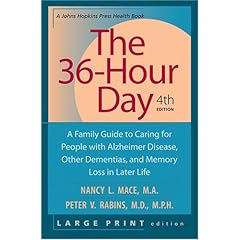
The 36-Hour Day: A Family Guide to Caring for People with Alzheimer Disease and Memory Loss in Later Life

Mothering Mother: A Daughter's Humorous and Heartbreaking Memoir Personal Note: This book will make you laugh; it will make you cry. It will make you think and make you feel. The book will give you some real perspective about your life and those you love. I recommend this book.
Editorial Reviews
From Booklist
O'Dell, a member of the "sandwich generation"--made up of boomers taking care of both their own children and their elderly parents--portrays the experience of looking after a mother suffering from Alzheimer's and Parkinson's with brutal honesty and refreshing grace. She peppers the memoir with scenes from her past, including meeting her adoptive parents ("The first time I saw Mama, I was four years old") and the death of her father. With three children and a husband of her own, O'Dell is torn in multiple directions, trying to be mother, daughter, nurse, cook, caregiver, maid, and more to a household of needy people. Mama's neediness is unrelenting, and O'Dell is at once bitter and sorry that her mother cannot be who she was. When the inevitable end comes, O'Dell wonders why she longed for the free time she now finds lonely and empty. A beautiful rendering of a difficult but all-too-common situation, told with plenty of humor, a touch of martyrdom, and much love. Mary Frances Wilkens
"I loved this book! I not only loved it, I lived it. I laughed, I smiled and shuddered reading this book. O’Dell has captured the essence of every Baby Boomer’s struggle to parent our parents." — Judy H. Wright, author, Kids, Chores & More
"Those of us in the Baby-boomer generation will resonate with the emotional roller coaster that many of us have or are currently experiencing, or fear having to face with our own aging parents." —Barry K. Baines, MD, author, Ethical Wills: Putting your Values on Paper
"Carol O'Dell is my new hero. . . . Told in vignettes instead of a linear fashion, O'Dell tells in brutal honesty the horrors and pleasures of exactly what one shoulders when saying, 'Come live with us; I'll take care of you.'" —Armchair Interviews, Casa Publishing
Author Reviews
Lynn Hoffman "author: The New Short Course in Wine... (Phila., PA USA)
There are really two stories packed into this marvel of a book:
one is the story of how a family came together. This is the story
that will leave you in awe of the human will to love and to make
groups in which to exercise that will.
The second, longer story is about how that family got smaller with
a mother's sickness and death. It is told with such tenderness
and good humor that the reader is left elevated-up on a higher
level with a longer view of life and those we care about.Mothering
Mother is funny, moving, ennobling and a real treat to read.
By Cheryl Tardif "aka Cheryl Kaye Tardif, author... (Edmonton, Canada)
Carol O'Dell, author of her debut memoir Mothering Mother, will make you laugh and cry. Her heartfelt chronicle about caring for her dying mother is an emotional tribute to self-sacrifice and a daughter's unfailing love--an adopted daughter's love, to be more precise.
Carol's mother adopted her late in life and raised her in a strict, religious environment. But it perhaps is their faith that kept them all together until the end. Although she has her faults and may seem somewhat cool at times, Mama did the best she could, and I think that is the realization that the author has come to. And certainly, it is what we all should hope to conclude at the end of our parents' lives.
The author shows us her own strength and her weaknesses, baring her thoughts, her emotions, her decisions and her very soul in a way that takes more courage than many of us would have. A loving daughter with a mother who suffers from Parkinson's and Alzheimer's, she takes her mother into her home, working around a husband and kids, and fighting the inevitable. Faced with the deteriorating health of a stubborn mother, Carol is faced with countless tasks in any given day or night, tasks that threaten to destroy her physically, mentally and spiritually. Many of the anecdotes are charming and hilarious, while others are heartbreakingly sad.
I recently bought a copy for my own mother--for Mother's Day--even though my mom is healthy, still working and independent. And while this may seem a strange gift, I felt that Carol O'Dell's book shows a glimmer of light at the end of what most people view as a dark tunnel. She shows that sometimes being prepared is half the battle. Perhaps then, many of us would not feel as though too many things were left undone, unsaid...unforgiven.
Mothering Mother is a beautiful story, a true story, of how love can conquer even death. I've never laughed and cried at the same time so much. It made me want to call my mom and tell her how much I love her. It made me talk to my daughter and tell her that if she ever had to care for me and felt that I was too much of a burden, that it was okay to look for alternate care.
I'll be honest; I normally don't read a lot of memoirs. I often find them hard to relate to. But I LOVED Mothering Mother! It is the type of book that everyone should read. It will stay with you long after you have put it down. And for those caring for aging or dying parents, it will give you hope and remind you that you are not alone--someone else has traveled this path...and she survived. So can you.
Cheryl Kaye Tardif, author of The River, Divine Intervention and Whale Song
Reader Reviews
By J. Frick (Amelia Island, Florida)
I loved this book, it made me laugh and it made me cry! I thought of my own mother and although she didn't have to linger on for years with a disease, I could relate to what Carol was going through -- and her family. Sometimes I think we forget how hard it is on the rest of the family beyond the primary caregiver. I love the style Carol wrote the book, in small sections, trying to capture events quickly. I would recommend this book to everyone!
By Belinda Hulin "Belinda" (Florida)
Anyone who has a mother--and especially those who are mothers--will find something edifying and soul-nurturing in this beautifully-written memoir. The end is sadly inevitable, but the journey there is a rich, full adventure of the heart. This true story shows that the bond between mothers and daughters can be a messy, painful business. But in the end, what shines through is the triumph, and the continuity, of love.
By Andy Tilley
Carol tells her heart breaking story with a frankness and honesty that says as much about her as a person as it does an author. The inevitability of her situation should be crushing but Carol's wit and candidness manages to lift even the darkest of moments. A must read for anyone who thinks that they might need help facing this, the most personal of challenges, in their future.
The 36-Hour Day: A Family Guide to Caring for People with Alzheimer Disease and Memory Loss in Later Life
 I ran across this article while "fishing" on the Internet. This tried-and-true technique can be used when you are at "wits" end when dealing with difficult behavior. The article contains examples that should help you develop your own frame of reference and techniques when dealing with difficult situations on a daily basis. It should be particularly useful in helping you understand that the often bizarre behaviors evidenced by your Alzheimer's loved one are not uncommon and can be dealt with effectively. This article is worthwhile reading and is worth "salting away" for future reference.
Nursing Homes, June, 2000 by Mark Warner
DESIGNS for Validation Therapy
Mark Warner
This tried-and-true technique can be supported in the Alzheimer's environment
As each member of the group sat in the circle hoping the balloon would gently drift their way, Roxanne burst from her chair in a fit of rage, shouting "There'll be no ball-playing in my house!" Furious at the insolence of the players who ignored her commands, Roxanne forcefully attacked a staff member, who tried to comfort her by explaining that she was not in her house, but merely with her friends playing a game. Roxanne didn't buy that and swung wildly, hitting the staff member squarely in the chest.
Fearing that I, too, might fall victim to the same fate, I cautiously approached Roxanne.
I put my arm around her shoulder and supported her in her cause that there should be no ball-playing in her house. "This is terrible," I said. "You're right, they should not be throwing that ball in your house, should they?"
"No, they shouldn't," bellowed Roxanne, showing only the slightest relief that someone saw her point of view.
"But you know, Roxanne, the only way they will stop throwing that ball is if we write down the rules for them. I think it's the only way they'll listen." Roxanne was buying this approach, so I suggested, "Let's go into that room over there and write down all the rules for them, okay?" Much to my relief, Roxanne agreed, and hand-in-hand we went into the room to write down the "rules."
"Okay," I began, "Rule Number One is 'No ball-playing in the house,' right?"
"That's right," agreed Roxanne.
"So what will Rule Number Two be," I asked, and then offered, "How about, 'No running in the house'?"
"That's right," said Roxanne, "my grandchildren are not allowed to run in my house."
"Roxanne, you've got grandchildren," I said, raising the tone of my voice with delight.
"Oh, yes, my little gran'boy is six years old, and he is as smart as they come." Roxanne was on a roll now, and the upset caused earlier by the balloon toss in the next room might as well have been miles away. Fifteen minutes later, when the game was over, Roxanne and I emerged from the room, both of us just as happy as we could be, the "rules" left on the table and the incident long forgotten.
The technique used here is called Validation Therapy. It assumes that no matter what illusion the person with Alzheimer's disease (AD) is living, she is right, and nothing you can say or do will convince her otherwise. Naomi Feil is the acknowledged expert on validation therapy and wrote the book The Validation Breakthrough. The basic concept is that you have to buy into the resident's illusion and convincingly play along with it, there by validating it. Eventually you'll see opportunities to mold the tale--and the resident's behavior--into something that is acceptable and no longer upsetting.
"What has this got to do with design," you ask? Everything, in fact. Understanding Alzheimer's disease and the many creative ways to deal with it are as much a challenge of designing an environment as of caregiving within it.
Angie is always complaining about the stranger in the bathroom. She won't use the toilet while "the other lady" is in there. She says that the bathroom is occupied, not realizing it is her own reflection that she sees. Do you explain that she is seeing herself in a mirror?
No. You go along with her. How about, "I'm sorry, Angie, let me see what's taking that lady so long." You go into the bathroom and somehow cover the mirror. One family confronted by this situation told their mother that the mirror was dirty and needed to be cleaned. They sprayed it with a powdered deodorant, creating a haze that obscured any reflection. "Mom, she's out of there now," her daughter said. "I wonder what took her so long. Let me know if you need anything. I'll be right here waiting for you."
Caregiver 1: "Deborah won't eat anything. She just sits at the table and stares at the food. She loves gardening, though; we spend hours every day weeding and pruning the vegetables in our garden."
A golden opportunity awaits us here. Figure it out. Deborah loves gardening, but won't eat.
"So we tried something a little different. Though the tomatoes were days from ripening, I went to the grocery store and picked out some beautiful red ones. Instead of putting them on the table in front of her, I pretended to come in from the garden, tomatoes in hand. As Deborah Looked at the tomatoes, I told her, 'They came from our garden and don't they Look delicious?"'
Granted, such ploys are not always so successful, but many are. Sharing the bounty of the garden, enjoying the fruits of your labor that you grew together, can somehow trigger pleasant, guiding thoughts and behaviors when all else fails. Perhaps it stirs up memories from long ago, or maybe it's just the thrill of eating your own garden vegetables. Regardless, it adds a new dimension to life that might very well conquer the ravages of the disease and perhaps bring new purpose to those waist-high gardens many facilities are installing these days.
Taking validation to the next step often involves anticipating the problem and creating the illusion. Validation, also referred to as deceptive therapy, white lies and fiblets, means creating a story--in the best interest of the person who is "confused."
"Dad, who's president? Do you remember his name?"
"Of course l do, it's Roosevelt!"
If your family member believes it is the 1930s, so be it. As he regresses in time, so do his memories of values, experiences and people. What was important then becomes important now!
Given residents' belief that they are living when Roosevelt was president, what would the world have been like back then? What would the good experiences and environmental features have been? How can we recreate the familiar feelings of that period in a convincing and subtle way?
For example, those were the days when they hung the clothes on a line in the back yard. Isn't that the kind of good and secure feeling we would want to recreate--possibly by merely providing a clothesline? Others might be enjoying the time when they were raising their families. What better way to indulge them than by allowing them to once again care for their spouse or children by hanging "their" clothes out to dry?
Or, perhaps they have less comforting memories.
Caregiver 2: "Mom collects everything--rubber bands, paper clips paper...everything! And she stores them everywhere. You can hardly walk in her room, there is so much stuff in there!"
Perhaps Mom is reliving times when the country was at war, when every little scrap was valuable in the war effort, or the Great Depression, when times were so tough that you had to keep everything, when nothing that might be useful was thrown out. Environmental validation then might mean providing easy-to-see drawers, trunks or cabinets to store these important items.
How were evenings spent in the good ol' days (before TV, let's say)? Many families spent hours sitting on the porch, watching people go by, talking to neighbors, etc. Why not create a porch, complete with rockers and swing gliders? Locate it carefully and safely, but within view of interesting activities (maybe a playground where children play). Make sure it is secure for those who might try to leave or climb over the railing; it should also be far enough from strangers outside who might be perceived as intruding into their space. Perhaps a screened porch would do the trick.
One should also beware of environmental miscues.
"Bruce, why aren't you eating?"
"I didn't bring my wallet and can't pay for the meal."
Although Bruce is living in an assisted living facility and doesn't have to pay for his meal, he doesn't realize that. As far as he is concerned, this large, beautiful dining room is a restaurant, and the more he eats, the bigger the bill. Perhaps if we had divided the room into smaller, more homelike dining rooms and spared the expense of the huge chandelier, Bruce would feel more comfortable with his home-cooked meal.
Don't forget that little environmental touches can mean a lot.
Caregiver 3: "My mother refused to take a bath. For years, soaking in a warm tub of water had been the highlight of her day. But now, for some reason, she feared the tub and everything it represented. Eventually she confided in me, relating a childhood story about a little girl who got sucked down the bathtub drain. She recalled that tale and, like that little girl, she was afraid that she too might fall victim to that terrible fate. The solution: We put a mat over the drain. Her fear suddenly disappeared."
In a daycare center, angry and impatient residents wait for their rides to take them home. Each time the door opens, one, two or even three of them race to it and powerfully attempt to get into the van, which has actually arrived to transport someone else. Staff members intervene, often unsuccessfully, overcome by the strength and determination of people with a very important cause (the van is there for them). If we, as facility planners and designers, can anticipate this kind of behavior, we can plan door placement to eliminate visibility of the van outside, thus avoiding this upsetting and potentially volatile situation. There are design solutions for problems like these, if problems are simply acknowledged and thought about ahead of time.
Although the stories I've recounted are all too familiar to healthcare professionals, they are often "Greek" to design professionals. Nevertheless, it is a design credo: To design for any client, you have to understand the client. Why should those who have Alzheimer's disease be treated any differently?
We are only in the earliest days of learning how to design for dementia. Hopefully, there will soon be a cure for these devastating diseases, making an article such as this a moot exercise. But until then, we must continue to delve into our creative minds, take chances and discover what works and what doesn't for this population. Nursing home/assisted living managers should help designers understand how people with dementia perceive and interpret their worlds. Only when equipped with this knowledge can we designers begin to address these problems with the tools that we have available to us.
Mark Warner, AIA, is the author of The Complete Guide to Alzheimer's Proofing Your Home, the first book in the Homes That Care series on age related conditions and creating homes for those suffering from them. His firm, Ageless Design, Inc., offers consultation and assistance in the design of environments for seniors. For more information, call (561) 745-0210, visit the Web site at www.agelessdesign.com or e-mail ewarner@agelessdesign.com.

The Emotional Survival Guide for Caregivers: Looking After Yourself and Your Family While Helping an Aging Parent

 Taken directly from the Rush Memory and Aging Project news release.
How often older adults read a newspaper, play chess, or engage in other mentally stimulating activities is related to the risk of developing Alzheimer’s disease, according to a study by researchers at Rush University Medical Center.
Taken directly from the Rush Memory and Aging Project news release.
Frequent Brain Stimulation in Old Age Reduces Risk of Alzheimer’s Disease
(CHICAGO) – How often older adults read a newspaper, play chess, or engage in other mentally stimulating activities is related to the risk of developing Alzheimer’s disease, according to a study by researchers at Rush University Medical Center published June 27 in the online edition of Neurology®, the medical journal of the American Academy of Neurology.
For the study, more than 700 people in Chicago with an average age of 80 underwent yearly cognitive testing for up to five years. Participants were part of the Rush Memory and Aging Project, a longitudinal study of more than 1,200 older people. Of the participants, 90 developed Alzheimer’s disease. Researchers also performed a brain autopsy on the 102 participants who died.
The study found that a cognitively active person in old age was 2.6 times less likely to develop dementia and Alzheimer’s disease than a cognitively inactive person in old age. This association remained after controlling for past cognitive activity, lifetime socioeconomic status, and current social and physical activity.
Researchers say the findings may be used to help prevent Alzheimer’s disease.
“Alzheimer’s disease is among the most feared consequences of old age,” said study author Robert S. Wilson, PhD, a neuropsychologist at the Rush Alzheimer’s Disease Center. “The enormous public health problems posed by the disease are expected to increase during the coming decades as the proportion of old people in the United States increases. This underscores the urgent need for strategies to prevent the disease or delay its onset.”
Wilson says the study also found frequent cognitive activity during old age such as visiting a library or attending a play, was associated with reduced risk of mild cognitive impairment, a transitional stage between normal aging and dementia, and less rapid decline in cognitive function.
The study was supported by grants from the National Institute on Aging and the Illinois Department of Public Health.
The Rush Alzheimer's Disease Center is one of 29 NIA-supported Alzheimer's Disease Centers across the U.S. which conduct basic science, clinical, and social and behavioral research on dementia and AD. General information on aging and aging research can be viewed at the NIA's home website, www.nia.nih.gov. For more information on the Rush Alzheimer’s Disease Center, visit www.rush.edu.
"ACTIONALZ.ORG", alzheimer's disease, blog, brain, stimulation, caregiver, care giving, chess, mental-health, National Institute on Aging, neurology, prevent, Rush University Medical Center
 Looking back, there is little doubt in my mind that if I had had the proper education or information I would have realized my mother was suffering from dementia sooner. Most people like me tend to ignore the symptoms at first believing they are simply signs of "old age". Anyone who ends up in my shoes knows and understands that a person in the early stages of dementia or Alzheimer’s can function with some normality--even drive a car. It is not until they deteriorate or until some "event" takes place that we wake up to reality.
 More than 5 million Americans, and 26 million people worldwide, have Alzheimer’s, and cases are projected to skyrocket as the population ages. Today’s medications only temporarily alleviate symptoms. Researchers are desperately hunting new ones that might at least slow the relentless brain decay if taken very early in the disease, before serious memory problems become obvious.


